Everything you need to know to have your online store

¿Quieres vender online?


This post is aimed at those who want to enter their business into the virtual world and have some doubts about it.
Decidí escribirlo al recopilar las consultas que mis clientes normalmente me plantean y notar que hay demasiados temas en común para resolver.

Therefore, I will tell you everything you need to know about E-Commerce or electronic commerce to have your online store, what benefits it offers you and what characteristics a good virtual store should have.
In addition, I am going to give you some tips and suggestions to optimize its operation and obtain the best profitability.

En otros articulos posteriores, te voy a explicar más en detalle algunas cuestiones inherentes a las tiendas virtuales.
At the moment we start with the most basic concepts.


What is an online store?

Una tienda online, también llamada Tienda virtual o E-Commerce, es un sitio web donde se ofrecen productos o servicios a la venta vía internet.
But the important thing to note is that an online store is not a common website, but has the capacity and the necessary structure to make sales "by itself", and often without the intervention of the owner of the store.

Its design features and web architecture are exclusively aimed at achieving a greater number of sales and streamlining the purchasing process.
El cliente elige el producto, la forma de pago y el tipo de envío. El vendedor lo recibe, lo gestiona y lo entrega según lo acordado, sin más.

A diferencia de una web corporativa, donde se muestra la información de la empresa y se espera que la gente contacte por e-mail, teléfono o redes sociales, una tienda virtual gestiona automáticamente todo ese proceso.
Se pueden elegir los medios de pago, calcular impuestos y costos de envíos, gestionar ofertas, ofrecer cupones de descuentos, mostrar valoraciones de los productos, etc.
Todo esto unificado dentro de una misma plataforma autogestionable por el mismo propietario de la tienda.

>>> I WANT MY ONLINE STORE <<<

Packaging posavasos

What characteristics should a good online store have?

El éxito de una tienda online depende de varios factores y características que debe reunir.
Most of them are offered by the online store itself, and others depend on your personal values and business vision to face a virtual business.

I will mention the main ones:

If the online store has these characteristics, success will no longer depend on them, but on factors such as the competitiveness of the sector, the law of supply and demand, marketing and advertising campaigns to publicize the store, site positioning web, etc.

1. Usability

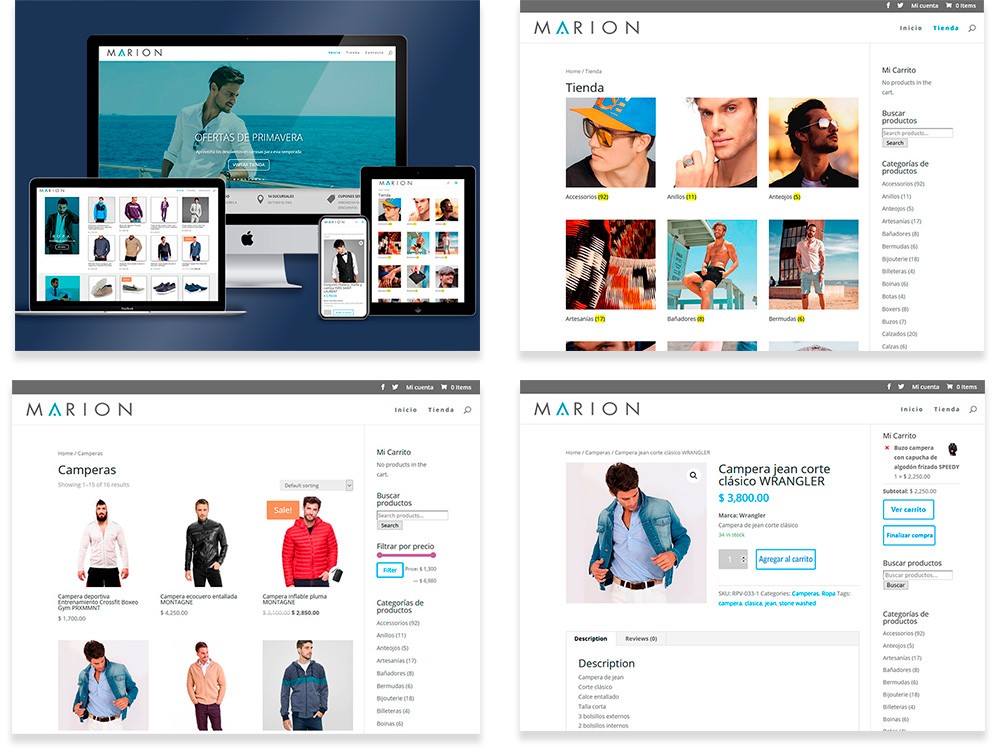
The store must above all be easy to use from any device, be it a desktop PC, a tablet or a cell phone, and in all of them it must have adequate functionality and readability.
Esto se da mediante un diseño sencillo y despejado, casi minimalista, que no distraiga al potencial comprador con información y detalles innecesarios.
Siempre debe prevalecer la funcionalidad por sobre la estética, sin descuidar ninguna de las dos.

Navigation must be intuitive and friendly, avoiding creating labyrinths from which the buyer does not know how to return.
A sidebar with permanent access with a product search engine, price filter, category search and updated shopping cart display, effectively solves navigation problems within the store.

El comprador debe poder acceder de inmediato a lo que está buscando, sin distracciones.
Es por eso que los productos a la venta deben estar estratégicamente ordenados por categorías, marcas, rubros, etc.
De este modo, el cliente podrá filtrar rápidamente los contenidos que está buscando.
2. Estética

Una tienda online debe ser visualmente agradable y mostrarse confiable, robusta y profesional.
No olvides que el comprador no tiene la posibilidad de conocer el local de tu negocio ni al personal que lo atiende.

Aquí no se tiene en cuenta el barrio ni el shopping exclusivo donde se encuentra tu tienda.
Tampoco tienes la posibilidad de demostrar tu amabilidad en un diálogo cara a cara con tus compradores, lo que favorecería a que finalmente se decida a comprar tus productos o servicios.

Everything that would impact the potential customer and make him make the decision to enter your store, must also manifest itself in the aesthetic aspect of your virtual store.
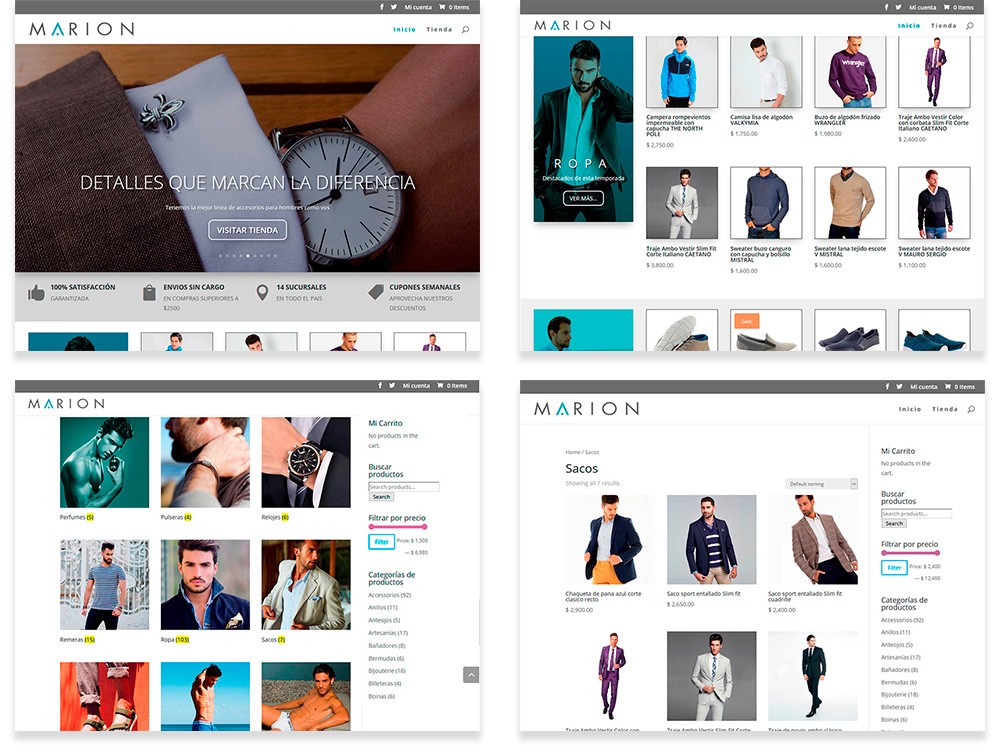
Sobriety, variety, abundance, prestige, security, efficiency, responsibility, friendliness are aspects or virtues that your store must show beyond the products it sells.

Your customers also do not have the possibility to physically see the products, touch, feel, smell, or perceive the textures, sizes, shapes and weight.
That is why the images must be of very good quality. In this case, the phrases "Everything enters first through the eyes" and "A picture is worth a thousand words" are very valid.

Therefore, this is the time to seduce, take advantage of it!

Te invito a leer mi artículo How to get the best profitability from your product photos for more info.

3. Detailed Products

Cada producto de la tienda online de muestra como una página independiente y debe brindar al cliente la información lo más clara y detallada, sin ningún tipo de ambigüedad ni nada que genere dudas al respecto.

It is true that the images speak for themselves at the time the buyer visits your store, but the texts are also essential.
Do not leave anything to chance or think that it is "understood", since everyone understands its convenience and that can bring you complications.

Quizás tú conozcas todos los detalles de lo que vendes, pero tu comprador los desconoce o simplemente no tiene manejo del lenguaje técnico que vos usás.
In these cases, it is best to use the Japanese "fool-proof" method and not skimp on descriptions even if they seem unnecessary.

Tienes que pensar que, en un entorno de soledad absoluta, el comprador decide hacer click (o no) en el botón de COMPRAR, y ¡tú no estarás allí para convencerlo!
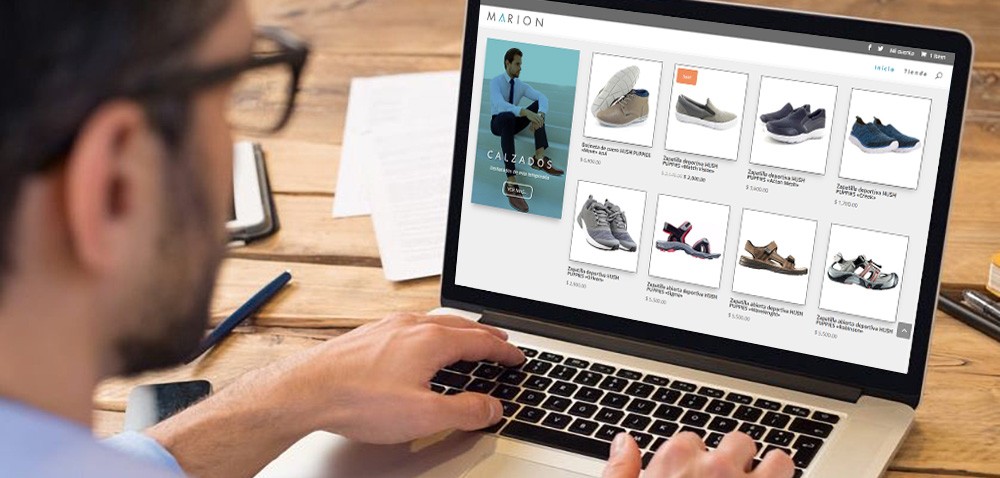
El comprador posiblemente tendrá dudas antes de decidirse a comprar, por eso te aconsejo brindarle la mayor cantidad de información gráfica y textual en las descripciones de los artículos.
This will also prevent him from sending you a lot of previous questions, which will take time to answer and end up delaying the operation or, in the worst case, that he decides to buy elsewhere.

Siempre ponte en el lugar del comprador que quiere comprar algo que desconoce, y bríndale la información que necesita al respecto para convencerle que te lo compre.
Tómate el tiempo necesario para describir cada artículo o servicio que ofreces.


Personalizar los productos

Each item in the store allows you to enter the following information:


  • Titulo breve descriptivo: Es el título del producto que aparece en la cuadrícula de la tienda.
    Este será el título de la página del producto y el factor fundamental para que tu cliente lo encuentre.
    El título además es fundamental para favorecer el SEO (optimizador de contenidos en motores de búsqueda como Google).
  • Price: It is the sale price and, if you want, also add a reduced price. In this case, the sale price is crossed out, the reduced price next to it and an indicator that says SALE!
  • Short description: It is a small text that complements the title and appears immediately below the price when entering the product (you can indicate brand, color, size, etc.)
  • Long description: It is what appears below as technical or complementary data. It can include additional photos and videos, technical data, measurements, ways of use, advertising messages, user manuals, frequently asked questions and everything you need to explain about the product.
  • Fotos y videos: Cada producto tiene una foto principal y puede tener más fotos en su descripcion larga, además de una galería de fotos complementaria.
  • Atributos y variaciones: Existen articulos que ofrecen varias versiones de color, tamaño, talla, diseño, etc.
    Cada una de ellas puede tener un precio distinto.
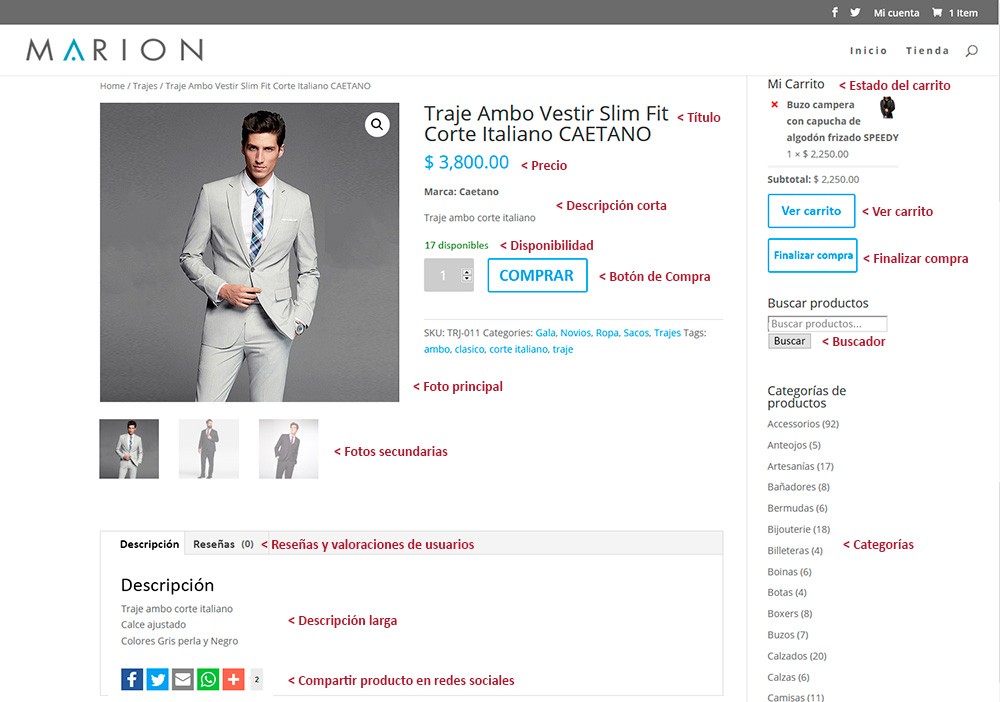
Detalle de pagina de compra de productos en tienda

4. Always updated information

The information of the products or services offered must always be perfectly updated, both in their descriptions, images and prices.
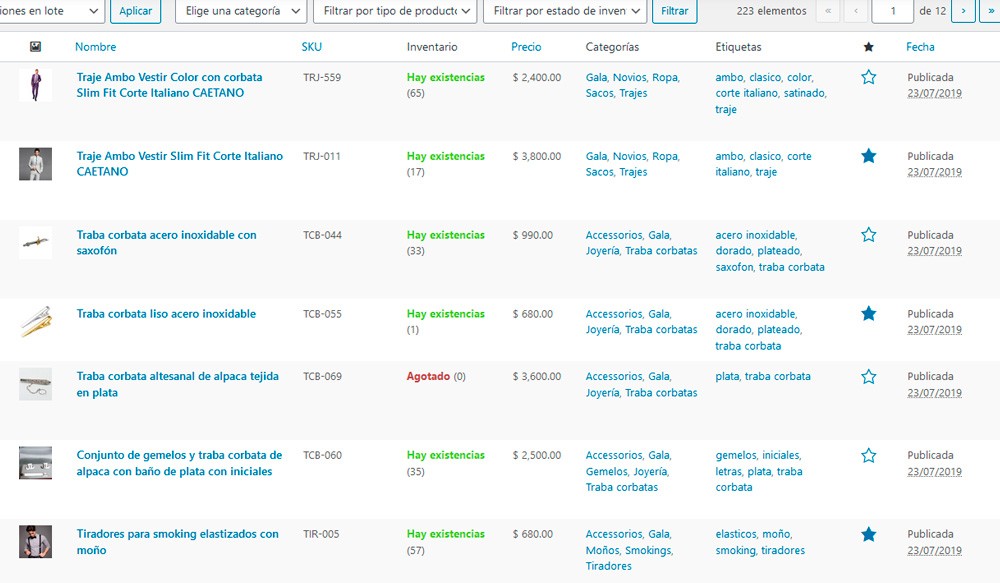
The online store allows you to manage your inventory in the cloud.

Puedes elegir en mostrarlo de dos maneras:

  • Available / Not available: No muestra cantidad de unidades.
  • Cantidad de inventario: Muestra cantidad de uidades en stock «Quedan 35 artículos»

Los productos no disponibles o agotados no deberían figurar en la tienda ya que hacen perder tiempo al comprador.
5. Value added

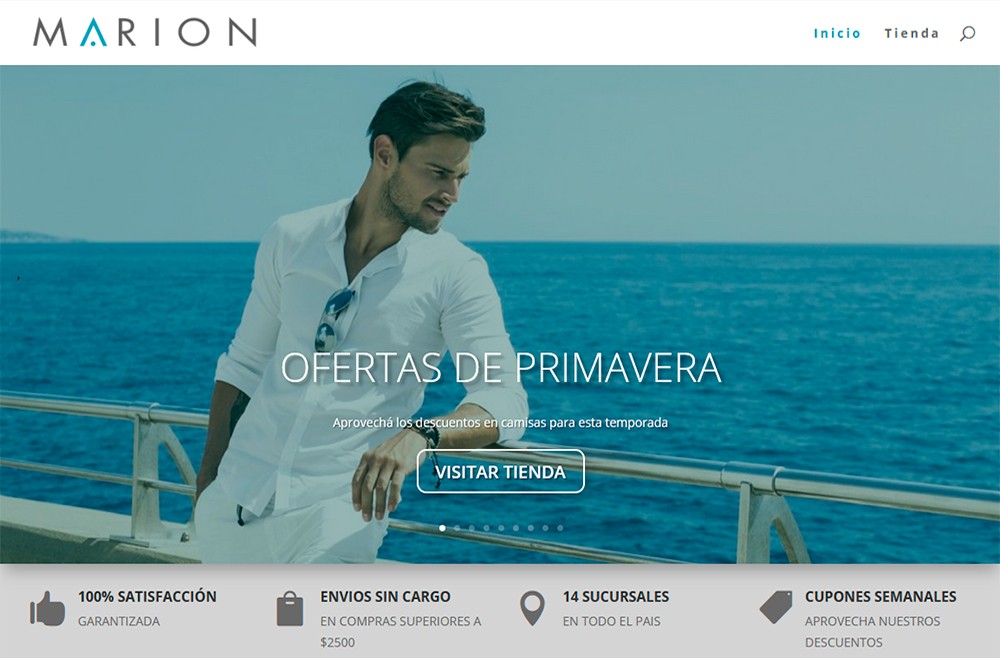
A virtual store must provide added value to its customers: the possibility of accessing exclusive offers and discounts, the possibility of receiving periodic information on news or offers, etc.

De este modo se creará en el usuario de la tienda virtual la necesidad de volver a visitar la tienda de forma periódica, aumentando así la posibilidad de que decidan adquirir los productos o servicios ofertados por la tienda.
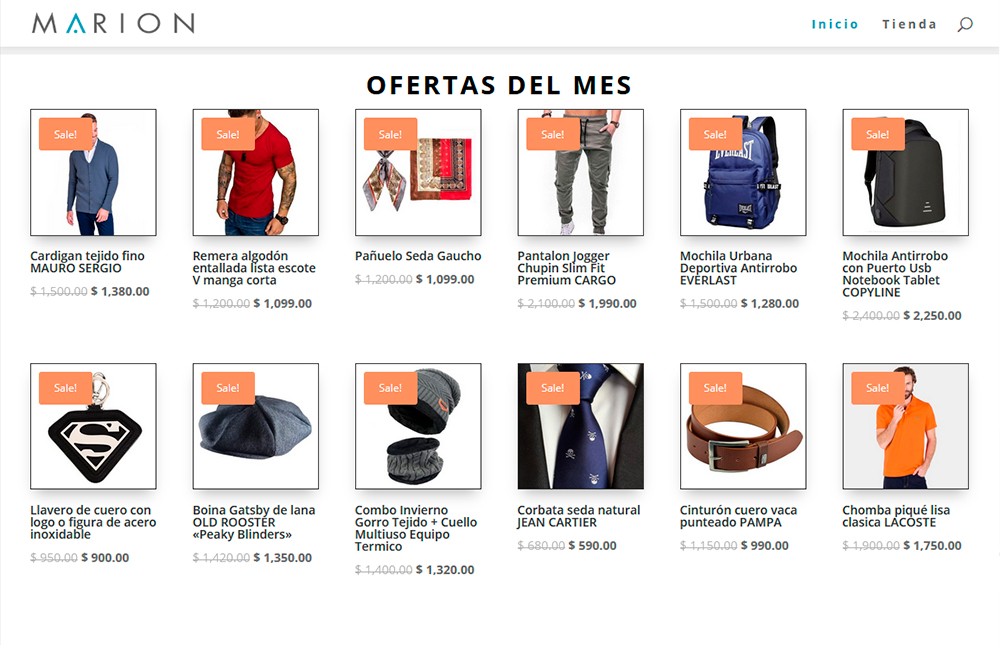
ofertas del mes en la tienda

6. Care details

Tu tienda online debe estar cuidada hasta en los más pequeños detalles.
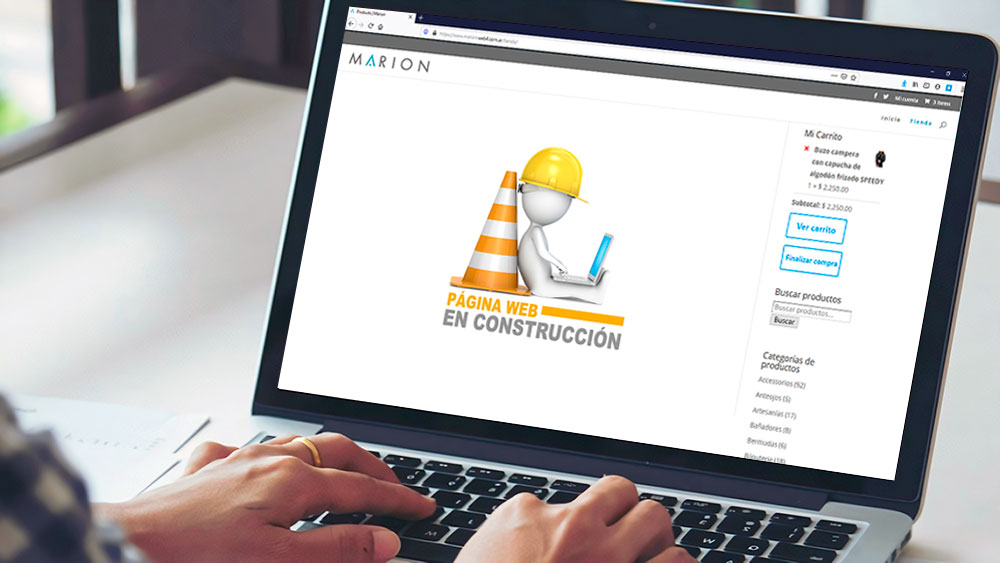
Un sitio web con errores en los textos, faltas de ortografía, imágenes que no se muestran o tardan demasiado en cargarse, enlaces rotos, etc. generará desconfianza en el potencial cliente, llevándolo a abandonar la tienda.

Never show empty or under construction sections. A customer who cannot find what they are looking for, will hardly return ...
7. Integration with social networks

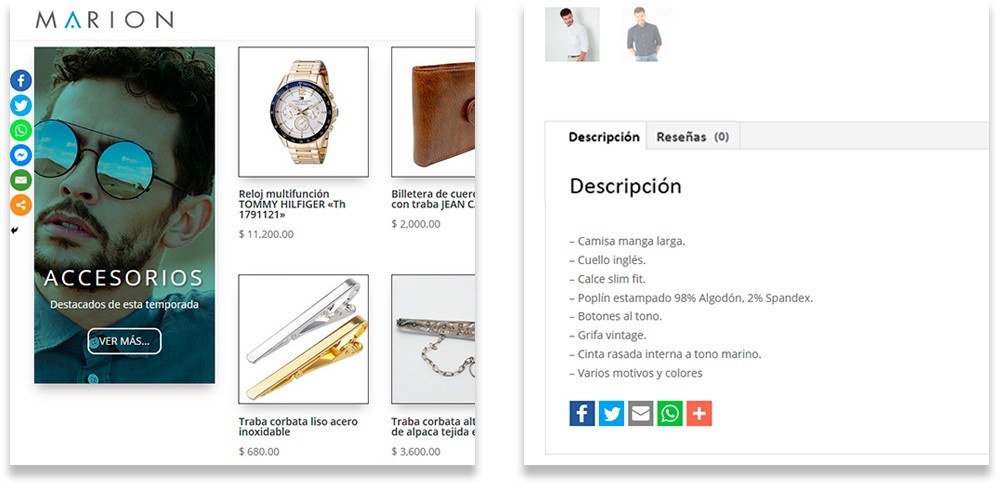
All the products in your store must be able to be shared on the social networks of your buyers.
It is very common for a person to see a product in your store and want to send only that product to another person to evaluate and buy it.
We must take advantage of all the benefits that social networks and digital messaging give us.
In addition, it is very positive that the customer can access your own social networks where they find additional content to those of your online store.
8. Feedback with customers

Puedes permitir que los clientes dejen comentarios y valoraciones de los productos. Esto hará que cualquier comprador indeciso elija finalmente concretar la compra.

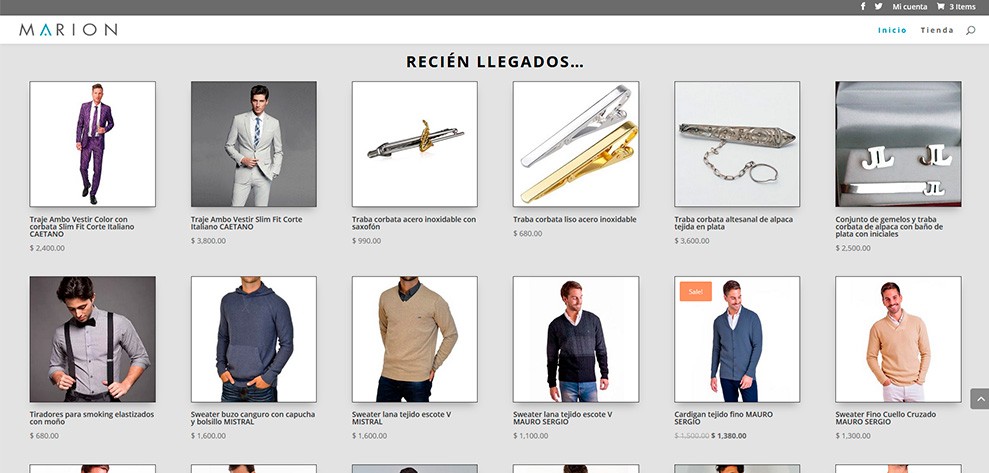
Además, puedes establecer productos destacados, últimos lanzamientos, ofertas del mes, artículos mejor valorados, etc, y mostrarlos al inicio de la tienda a modo promocional.
9. Credibility

Muchos usan un perfil de Instagram o una fanpage de Facebook para vender productos o servicios, y eso no está nada mal.
Pero todos sabemos que cualquier persona puede tenerlo sin ningún soporte legal, y que muchos de ellos incuso pueden ser falsos.
This is how profiles and “ghost companies” appear and disappear that are not registered anywhere and to which we cannot make any claims in the event of scam or unsatisfactory sale.

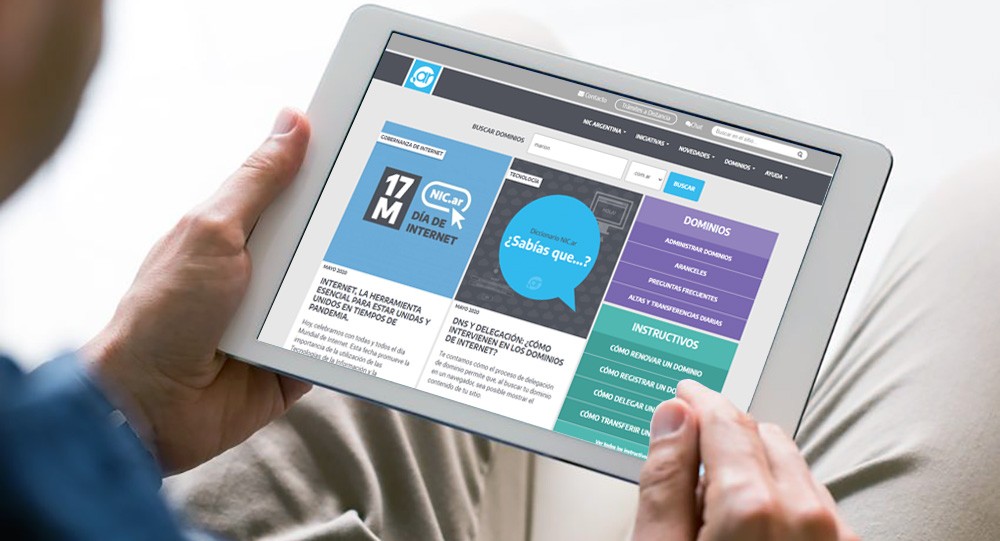
Unlike social networks and being a website, the online store requires a domain that guarantees that it belongs to a natural or legal person, that it is registered with an official body, and that any user can consult its real existence online .
Furthermore, the national domains (.com.ar) are controlled by AFIP, which guarantees that the owner actually exists and is in a position to market online.
10. Security

In addition to having a national or international domain, the owner of the store must contract a webhosting service from any company that is a provider of such service.
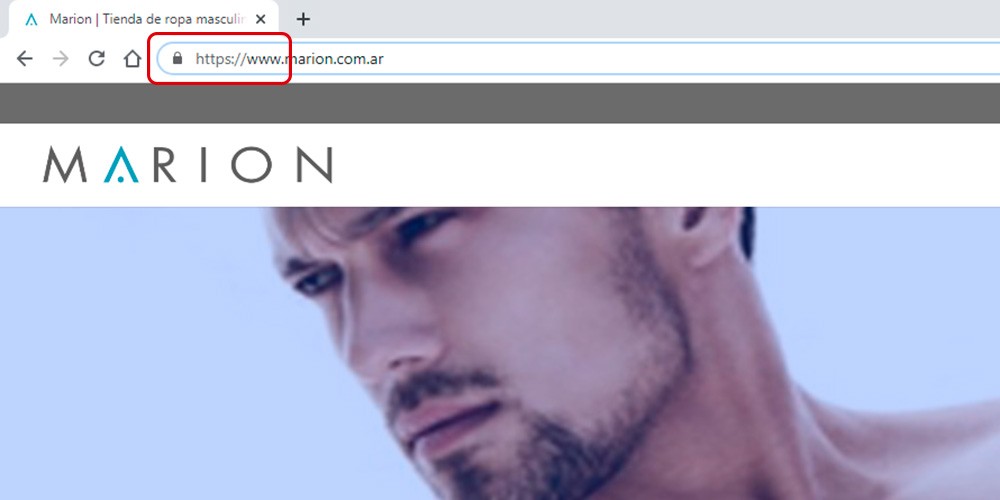
This hosting, in addition to being registered with said company, must have activated SSL security protocols that allow secure online business operations.
Esto es fácilmente identificable ya que la dirección web o URL se muestra en el navegador como HTTPS
Algunos navegadores muestran también el ícono de un candado cerrado y la leyenda “sitio seguro”

This encrypted protocol provides security to the client to safely carry out transactions by credit card or any payment gateway that requires entering personal data online.
11. Accessible purchasing information

The cuestomer should be able to visualize at all times the information about the products or services that he has selected for his purchase, their quantities, prices to pay, taxes, shipping costs, etc. and it should be easy to modify these quantities before finalizing the purchase.

At the same time, you should be able to consult at any time the information about the delivery time of each product or service, purchase conditions, information on returns, contact details of the seller in case you need help or additional information, etc.
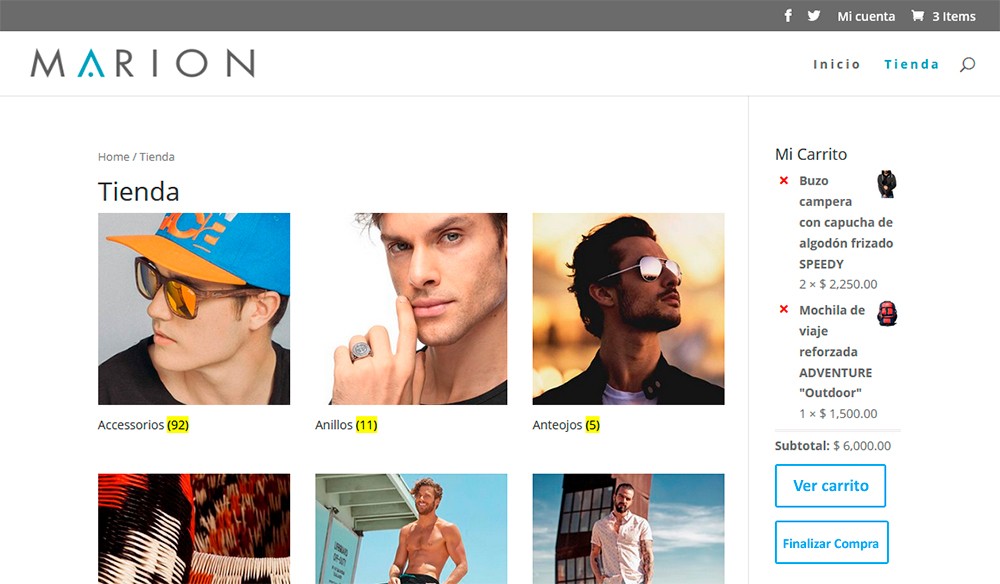
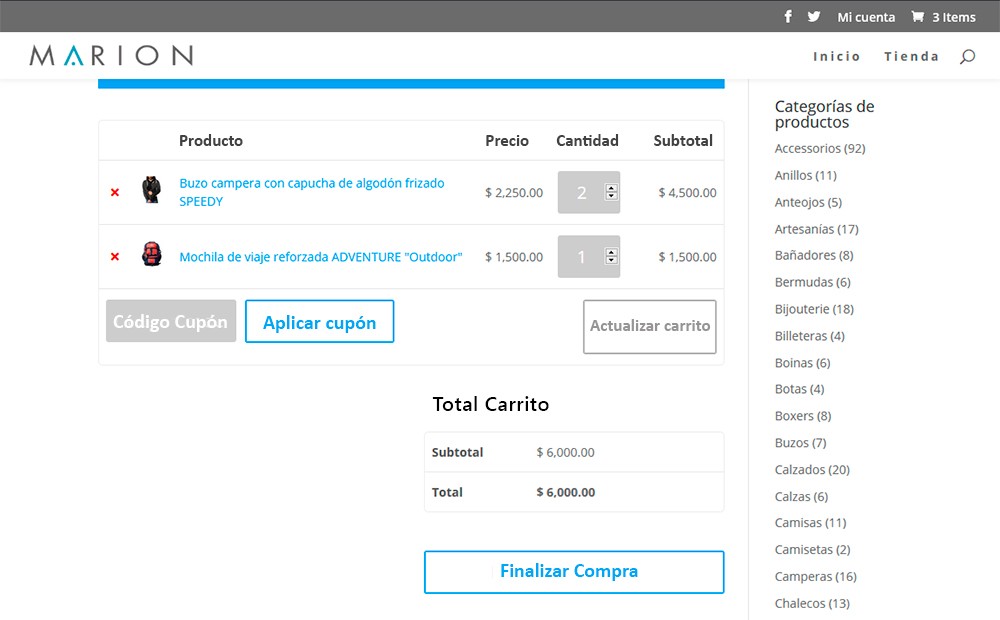
carrito de compras
carrito de compras

12. Elección de formas de pago

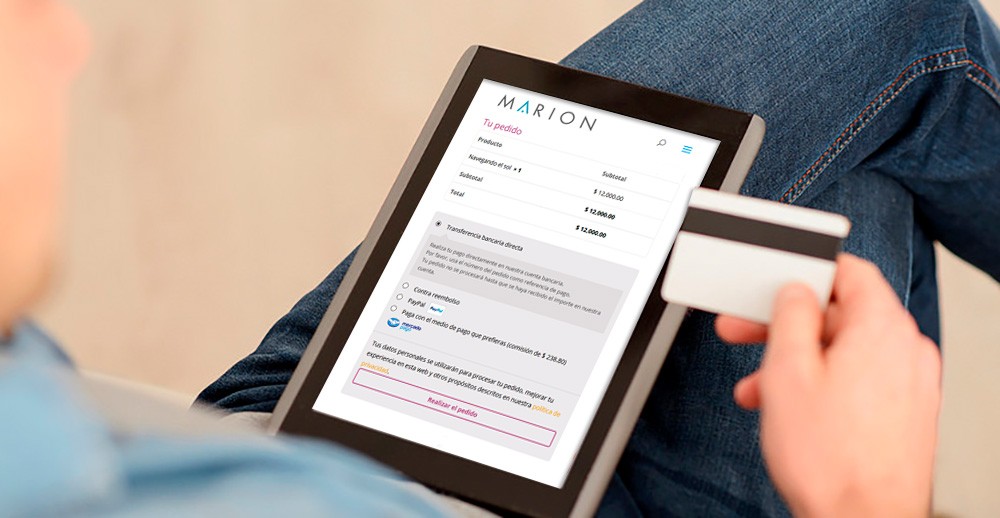
La tienda online debe proporcionar al posible cliente las formas de pago más habituales.

Your online store allows you to operate in two different ways safely:


  • Sin comisiones: Pago en efectivo contra reembolso, transferencia bancaria o cheque.
  • Con comisiones: Mediante pasarelas de pago con tarjeta de débito o crédito como MercadoPago o PayPal, donde las comisiones son establecidas por las diferentes plataformas.
13. Customer Service

Tu tienda online debe contar con un excelente servicio de atención al cliente, habilitando líneas telefónicas, WhatsApp, redes sociales y consultas a través de e-mail, etc.

Es necesario mostrar a los potenciales clientes que detrás de la tienda virtual existe un equipo humano de calidad dispuesto a ayudarlos en lo que necesiten, y que ofrece una respuesta rápida y eficaz ante cualquier problema.
14. Transparency and clarity in the information

The online store must provide clear and easily accessible information about:


  • Identificación de la empresa vendedora: Dirección postal, teléfonos, e-mail, geolocalización, redes sociales, etc.
  • Final prices of products or services: Including the details of taxes, shipping costs, etc.
  • Preguntas frecuentes: Tu tienda debe contar con una página de preguntas frecuentes. Esto aclarará las posibles dudas del comprador y evitará que pierdas tiempo respondiendo innecesariamente.
  • Política de privacidad y aspectos legales: Tu tienda debe contar con una página de política de privacidad que el cliente acepta al realizar una compra, y te protege a tí y a tu negocio de posibles reclamos judiciales.
15. Availability

An online store must be available 365/24, and that is why you should choose a good webhosting service provider that guarantees the correct operation and permanence online.

Jamás contrates servidores muy económicos, ni mucho menos gratuitos. Tu seguridad y la de tus clientes está en sus manos.
A failure during the purchase process or in the implementation of payment methods will lead to a loss of income and, worse, the loss of trust placed by customers in your online store.
Although it is true that the failure could be caused by the client's internet connection, but that would no longer be your responsibility.
Tips

Finally, I leave you some tips to optimize the performance of your online business


  • Atiende a los pedidos con rapidez.
  • Answer to inquiries immediately. Feedback is very important to your customers and surely the buyer has already made the same inquiry in another store similar to yours.
  • Crea sliders promocionales con ofertas especiales y actualízalos con regularidad.
  • Publica periodicamente nuevos productos.
  • Update your social networks.
  • Tóma en serio tu tienda virtual y disfrútala.

Final conclusion

I hope you enjoyed this article and that it was useful to you.
Now that you know everything you need to know to have your online store, I hope you decide to have yours.

Si consideras que soy un buen profesional competente y quieres confiarme tus proyectos de diseño y sumarme a tu equipo de trabajo, no dudes en contactarme

In the Related posts section below, you will find many articles with specific topics that complement the one you just read.
I invite you to read them, share them and leave your comments if you wish. .
Thank you very much.

>>> I WANT MY ONLINE STORE <<<
Packaging posavasos

The most complete guide to understand logos

Let's talk about logos

This is the most complete guide to understanding logos.
Do you know what is the difference between logo, isotype, isologotype and imagotype?

In this post I intend, without lecturing on anything, to show you everything you need to know about logos.
You will know the different types classified according to their morphological and semantic structure, graphed with very famous logos that you probably already know.

If you are a graphic designer, this guide will help you to reinforce your knowledge and incorporate some aspects that you may not have known about.
If you are a client who is looking to design your brand, you will have a global idea of all the design possibilities that I can offer you, and choose the one that best suits your company, product or service.

I welcome you and hope you enjoy it.

>>> I WANT MY LOGO <<<
Packaging posavasos

What do we call a logo?

Not everything we call a logo is actually a logo.
It is a misconception to call any graphic image that identifies a brand a logo.
But it is also true that our clients surely do not know all the technical terminology that we use. graphic designers.
And when requesting a visual identity design service we would be complicating the task of finding us on the web.

That is why we usually use the word logo (or its shorthand for logo) in a generic way, and we all understand what we are referring to.
In order to favor the SEO positioning of our services in search engines, we accept the word logo to cover all possible variables.
Therefore, it is certain that very few will Google “image design” but rather “logo design”.

What a logo is?

The word logo comes from the Greek language, where "logos" means "word" and "typos" means "punch mark or imprint".
This is because the old printing systems stamped the characters by means of blows given with molds called types.

The visual image of a brand, product or project (which we usually call a logo), is a graphic symbol that identifies it, allowing it to be recognized among its peers.
Some brands are capable of transmitting a message, a concept or specific information about it. which represent.

Although it is not necessary that this image be allusive to the brand, it is considered a good "added value" that this symbol transmits some allegorical message.
This message can be oriented both to the name and to the activity they carry out, favoring the pregnancy in the public and its correct identification.


Read my article 80 logos famous with hidden messages where you will know some interesting curiosities about the design of many logos that you will surely already know.


Represent the synthesis of an idea

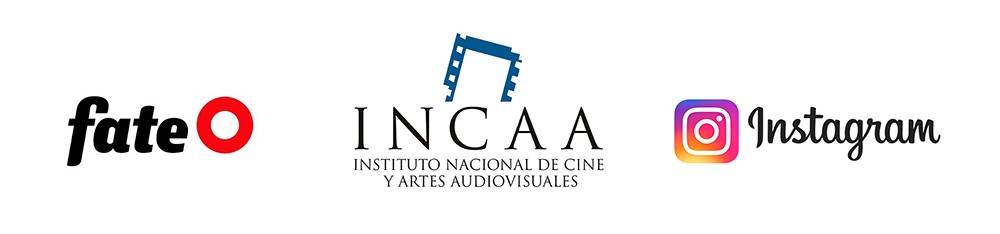
The Fate logo represents a tire. Fate manufactures tires and the chosen symbol is the synthesis of their activity reduced to the minimum expression: All tires are round.

The INCAA logo represents a film frame: All stages of the film production process are reduced to a cut frame.

The Instagram logo represents a camera. Instagram is a photography social network: All photographs are obtained by means of a camera.

Therefore, we summarize that a logo is not just any graphic drawing or pretty typography that identifies a brand.
Graphic designers often hate when our clients say to us very proud: "I send you the logo in Word" and it is their name written in any typeface and color, but that is another topic of discussion.

What do we need to consider before designing a brand?

Before undertaking the project to develop a visual identity we have to know our client very well and know what they want to communicate, and thus obtain the concept of the brand.
Subsequently, it is essential to know what type of product or service sells and how the brand will be applied.


Brand usability

It is not the same to design a logo for electronic devices than one for a clothing brand, where the brand will be applied embroidered on a small fabric label.
In these cases, we should not design logos with too many details or quantity of colors, since we will have many inconveniences when applying them on the products.

Some companies require to apply their marks in large canopies with corporeal letters, or on the contrary, in very small supports such as pins or pens.
A brand's design must also support video animation or 3D implementations.
That is why we have to take into account all these factors before choosing what type of brand we are going to develop.

Logos 3D

What are the different types of logos and how do we identify them?

The visual image of a trademark can be made up of one or more words and a symbol in various combinations.
Next, I am going to explain to you with very famous examples, all the types of logos classified by their morphological and conceptual structure:

1. Logotype

The logo or wordmak consists of a brand composed exclusively of words.
It is a mistake to consider any name to which a typeface and an institutional color is applied as a logo.
A brand should try to be unique and perfectly recognized .
Logos must have a projected design with a communication strategy.
The typographic style and the appropriate choice of institutional color must be taken into account, both determining factors to give a visual identity to the brand.
The logo color is not a determining factor of identity.
A good brand must be able to identify itself in black and white, positive and negative.

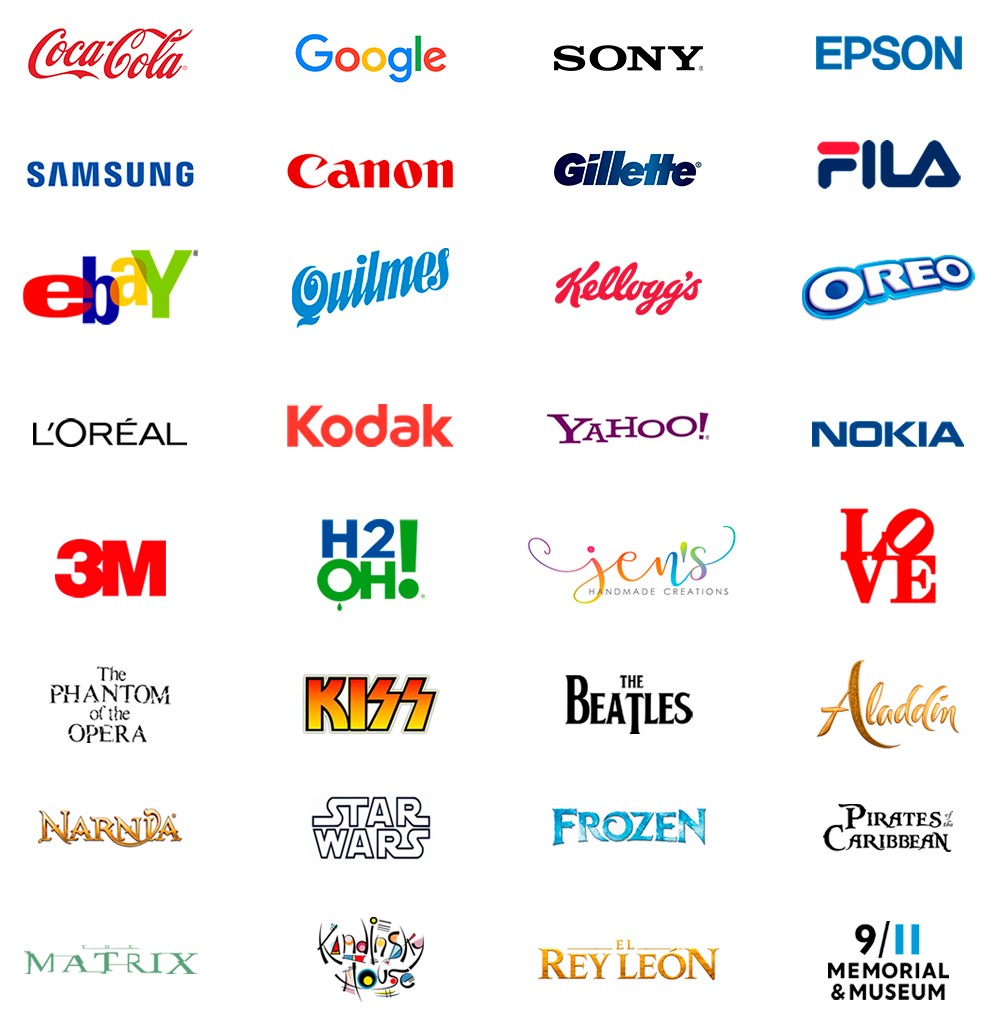
Logotipos

Variations allowed

Large companies generally create their own typefaces that add identity.
Others take popular commercial typefaces by adding subtle detail or applying some kind of warp to them.
Thus we can see the use of expansion, contraction, variation of the kerning, curvatures in its baseline, which provide traits of business identity.

Some brands incorporate very subtle geometric elements that are not considered as isotypes or pictograms, and for this reason they are clearly considered logos, and not images or isologotypes.
Any other graphic element that composes it (boxes, outlines, underlines) will be secondary and will not provide identity but only decoration or graphic reinforcement.

Logotipos con variaciones

Some logos have duplicate letters or special typographic characters (such as umlauts, dashes or accents), or simply variations in their letters (ligatures, rotations, mirrors).
These are very useful elements, since strategically designed they grant an additional semantic value to the brand.

Logotipos con signos

There are also marks in which some of their characters are replaced by a pictogram with similar shapes.
These fulfill the role of the letter they substitute, and in other cases, the symbol replaces a verbal or phonetic expression.

Logotipos con simbolos

Some designers use the negative value resource to omit characters without losing readability.

Logos con contraformas

Other designers choose to take a bolder step and create typographic alphabets with minimal legibility but with a great pictographic sense, reaching the limit between the concept of logo and isotype.

At first glance it is perceived as an abstract isotype but in reality it is a typographic logo.

Alfabetos especiales

2. Isotype

The word isotype comes from the initials of the English expression “International System of Typographic Picture Education (Isotype)”.

The purpose of this system was to achieve visual communication through purely visual, non-verbal elements.
The value of this type of proposal was quickly capitalized by the advertising world for the benefit of brand positioning in the market.
Therefore, the isotype or symbol of the brand is a graphic symbol (not typographic) that represents the visual essence of the brand.

It is the perceptible representation of an idea, with features associated with a socially accepted convention:
They have the peculiarity of being able to be applied independently (without the logo) without losing identity.


The power of giving identity

Sometimes the isotype is so strong that when you see it you immediately associate it with a brand without having to read its name.
Many isotypes are allegorical or tell a story related to the brand they represent.
Generally used in large international companies with long trajectories, whose products or services are deeply rooted in the people.
In these cases, the mere presence of the isotype indicates prestige, quality and institutional solidity, and that is why they generate in people the need to acquire them.

Isotypes can be pictographic or typographic symbols.


Pictographic symbols or pictograms

Pictogram is a neologism and has its etymological origin in the Latin "pictus" which means "painted" , and in the Greek "gramma" which means "written"

Pictograms are signs that, through a figure or a symbol, allow to develop the representation of something.
Many ancient alphabets were created around pictograms, such is the case with Egyptian hieroglyphs.
In prehistory, man recorded various events through pictograms.
The figures that appear in cave paintings, for example, can be considered as pictograms.

A pictogram is a sub-class of isotype and consists of a symbol in the form of an icon that represents the minimum synthesis of the objects, shapes or characteristics that best identify it.

Pictograms can be figurative or abstract.

Figurative pictograms

They have great graphic similarity with the real elements they represent and their design is very simple and minimalist.
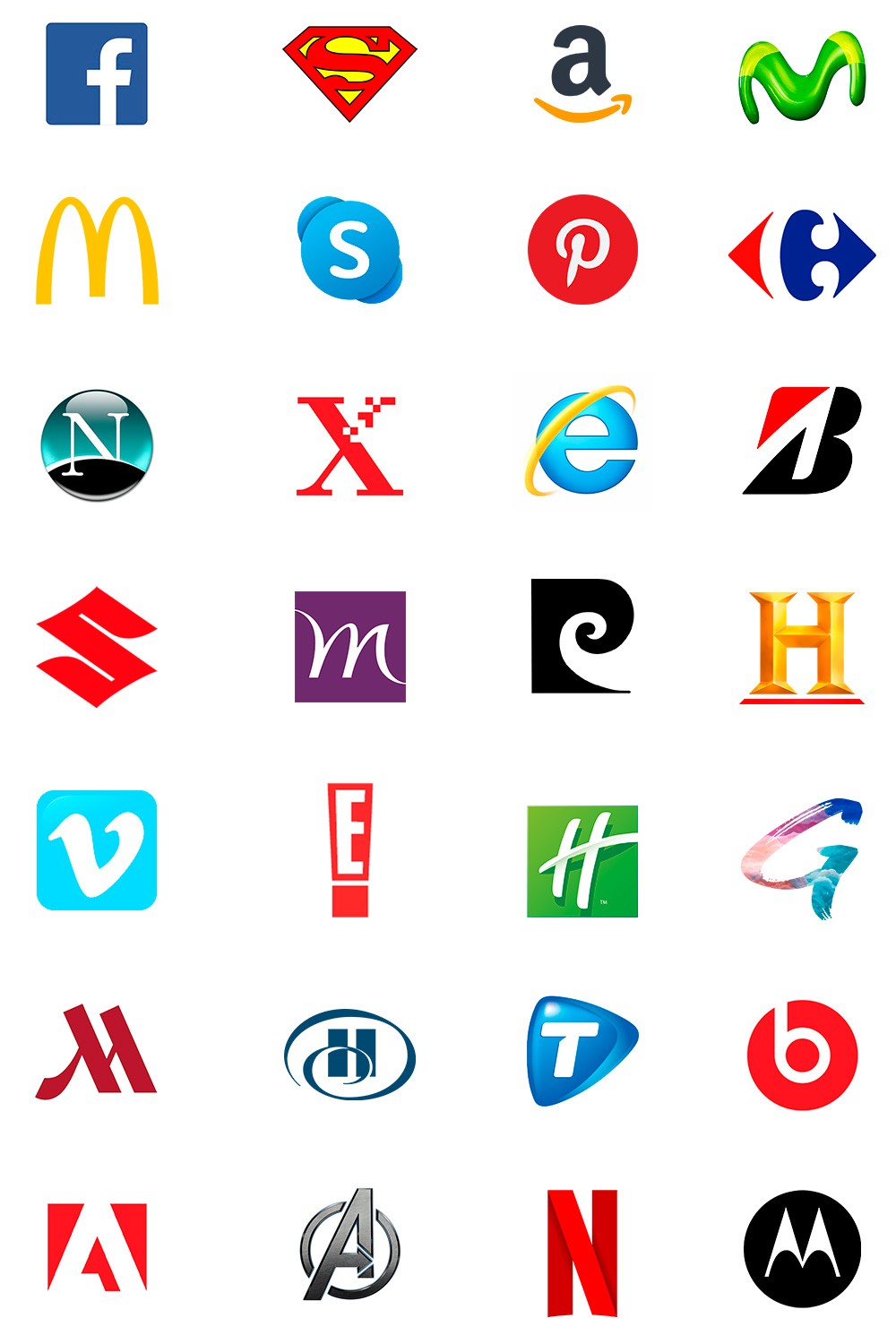
They are easily recognized and accepted by consumers, and they create a very close identity relationship with the brand they represent.
That is why We mention them as Apple's apple, Twitter bird, Mercedes Benz star , etc.

Picotgramas figurativos

Abstract pictograms

Unlike figurative pictograms. They are not directly related to elements of the real world, but rather represent a subjective concept or idea of the brand.

Picotgramas abstractos

Pictograms on signage

The pictogram is not an exclusive concept of brand design.
They are also used in the design of signaling systems due to their ability to replace words or concepts with images or icons.
This is very necessary and favorable to break from this way the international language barriers.

These are universally accepted symbols, with an extremely simple and minimalist design.

These symbols have a direct semantic relationship with what they represent, so as not to leave your meaning behind.
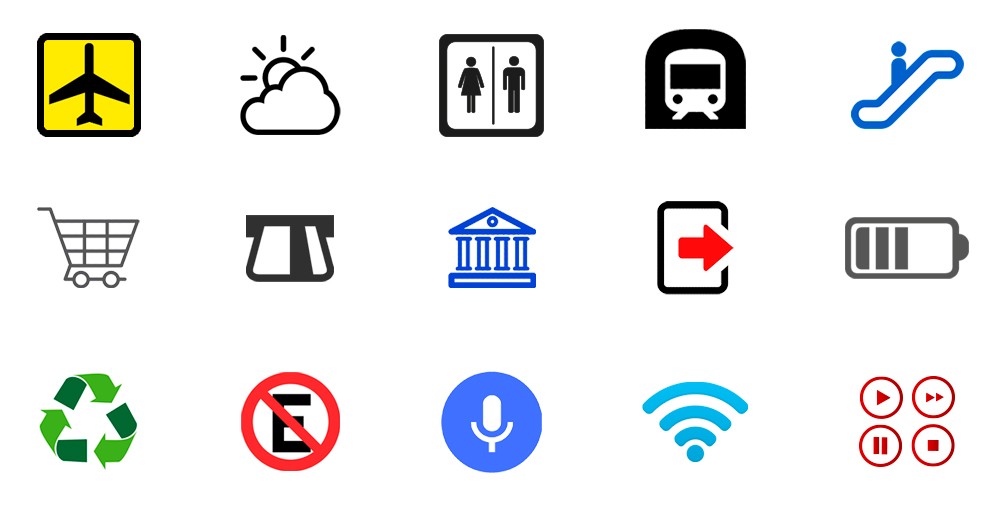
That is why it is very common to see them in public spaces such as airports, restaurants, highways and shopping centers, as well as on electronic devices .

Pictogramas en señaletica

Pictograms in everyday life

Surely very few times you became aware of the role that pictograms fulfill in our daily lives.
Not only from the world of brands, but also in the environment in which we live.
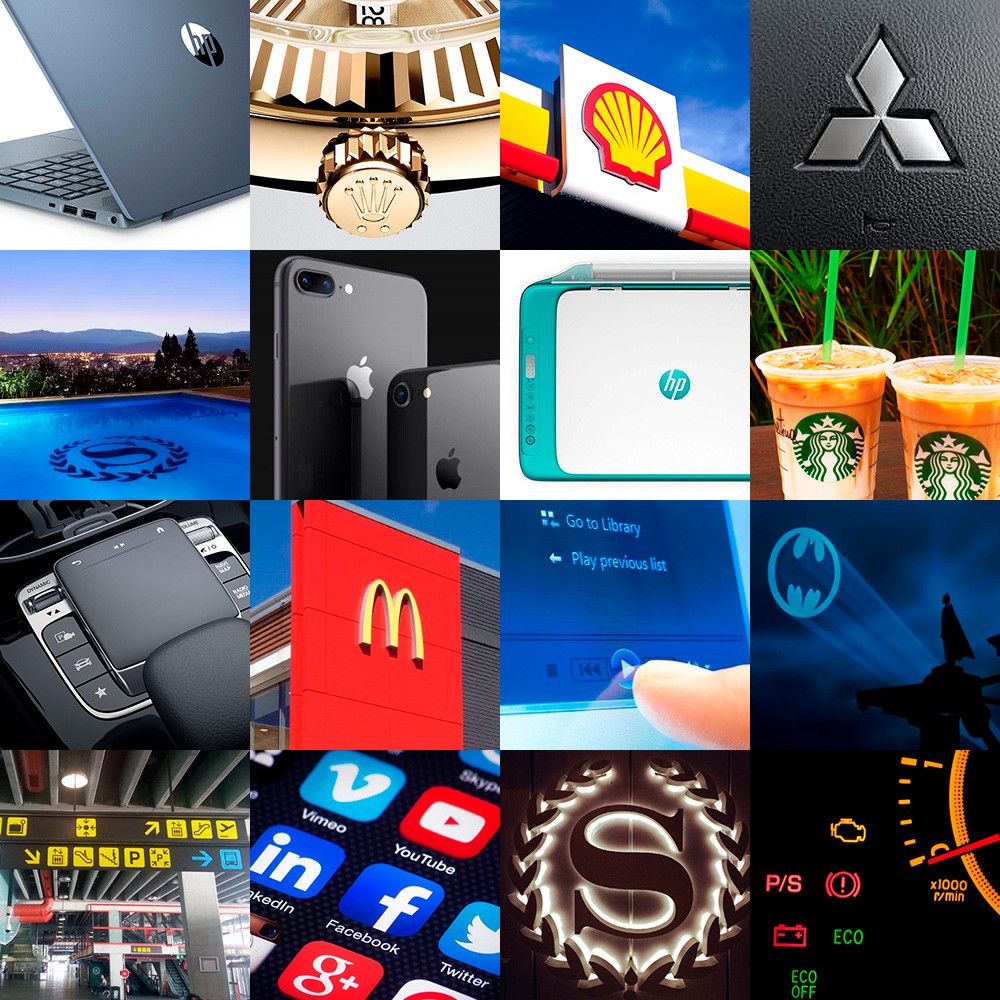
We are able to identify a commercial brand through its pictogram without having to see the name (unspoken mode) and that is possible thanks to good graphic design and successful advertising campaigns.
Without realizing it, we are bombarded with signals and stimuli that finally make us recognize those symbols even if we don't consume them.

Almost everything that surrounds us has some kind of pictogram and graphic design, from the remote control of the television, the urban signs, to your mobile phone.
We live permanently interacting with pictograms without realizing it, and these greatly simplify our daily life.

That is why when someone tells you that graphic design is not important or that it is only a «decorative» discipline, ask them what they would do if they were in an airport in Dubai or Tokyo without the presence of those «cartoons» that they despise so much.

Pictogramas aplicados

Typographic symbols

They are made up of typography and the main characteristic of these symbols is that the characters form graphics, but not words, so it can be confused with a logo.
According to the number of characters that compose it, they are divided into: Initial, Monogram, Acronym, Acronym and Anagram.


Initial

The brand is represented only by the first letter of its name and can have an element that contains it (a square, a circle, etc.)

Logos con inicial

Monogram

The word monogram comes from the Greek "monos" which means "alone, unique, isolated" and "gramma" which means "engraved, written"

The monogram is a logo variable and is applied to brands that use two or three initials as an abbreviation, and can be used (or not) accompanied by a logo.
Generally they correspond to the first and last names of people or the initials of the words that make up the name of a company.
It is not simply individual letters.
They are graphically combined by means of a design, interlacing the features of some letters with others, to form a sign fused in a single unit to stamp mode.

Logos con Monograma
Logos con Monograma

Sigla

Etymologically it comes from the Latin «sigla» which means «figures and abbreviations».

It is a word formed by the set of initial letters of an expression.
Each letter corresponds to a word, is pronounced independently, and does not form a new word, as in the case of anagrams and acronyms.
It differs from monogram in that it is not intended to create a fused symbol, but rather that the letters differ well separately.
They are generally used in large multinational companies to summarize very long or difficult international pronunciation names.

Logos con siglas
Logos con siglas

Acronym

An acronym is a linguistic rather than a graphic concept.
Its etymology is of Greek origin formed by the words «akros» which means «extremes», and «nimo» which means «name»
Consequently, an acronym means "extreme name" or "name made up of extremes."

On the one hand, it is the term formed by the union of elements of two or more words: Mercosur (Mercado Común del Sur), FedEx (Federal Express), Banelco (Banca Electrónica Compartida), Wi-Fi (Wireless Fidelity), etc.
On the other hand, an acronym that is pronounced as a single word is also called an acronym: NATO, UFO, UN, AFIP.
It also refers to the word formed by the union of elements of two or more words, consisting of the beginning of the first and the end of the last.

A clear example is Pinterest , a social network that summarizes the idea of clicking with a "pin" on the board those contents that "interest" us, so that they are quickly accessible when we need them.

Large multinational companies take advantage of the use of acronyms to create short, strong brands that are easy to recognize and pronounce in different languages.

Logos acronimos
Logos acronimos

Anagram

It comes from the Latin «anagramma» and consists of creating a new word from the rearrangement of the letters that make up another word.
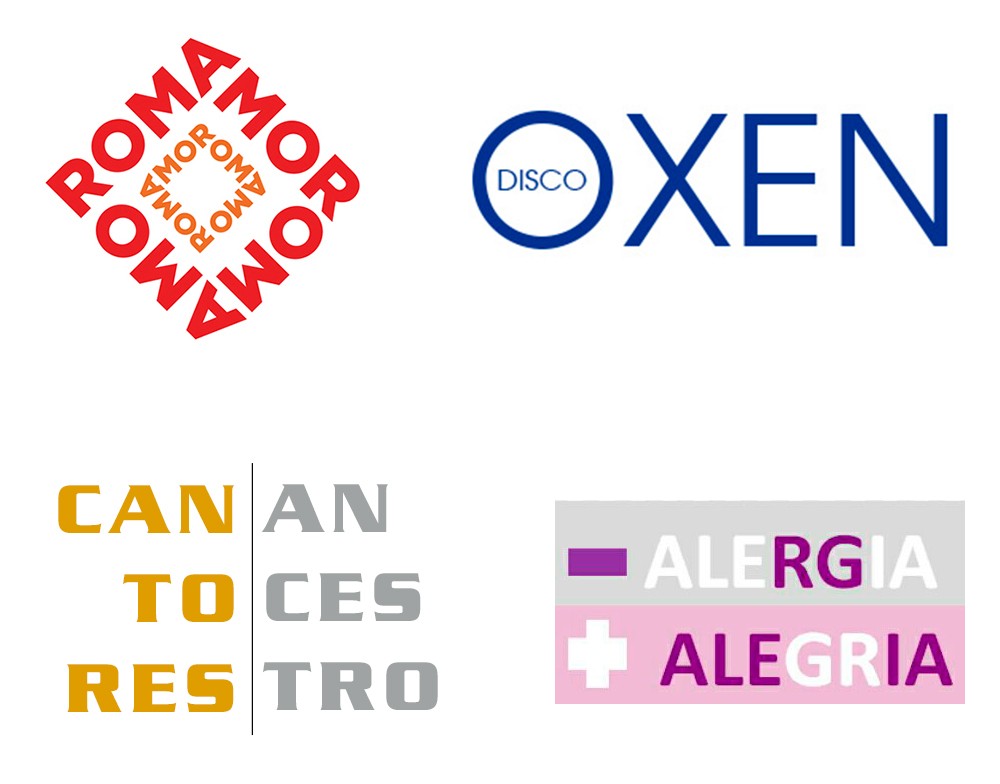
They are very common examples of anagram: LOVE, ROMA, ARMO, MORA, RAMO

Therefore, an anagram, like an acronym, is a linguistic rather than a graphic concept, allowing the creation of word games that add originality to the brand name.

In the following examples, OXEN is a by-product of the NEXO company and the set of letters indicates the membership relationship between the two.
CANTORES ANCESTROS (ANCESTRAL SINGERS) is a folkloric musical project with strong aboriginal roots, and its name represents its essence: Singers who perform their ancestral music.
- ALERGIA + ALEGRÍA (in spanish means "less allergy, more joy") in addition to playing with the paronyms, it incorporates the antonym: ALERGIA (ALLERGY) produces sadness, and it is the opposite of ALEGRIA (JOY).

Logos Anagramas

3. Isologotype

An isologotype or isologo is a type of combined brand, which consists of an isotype and a logo grouped in a single graphic symbol that cannot be separated, as an identity seal.

You have to be very careful when designing isologos.
Being words within symbols, graphics can have legibility problems in very small brand applications, less than 15 mm.
Such is the example of merchandising products printed matter: pens, pins, newspaper ads, etc.

Isologotipos
Isologotipos

4. Imagotype

The origin of the word imagotype comes from Latin "imago" which means "image" and « type » comes from the Greek « typos » which means « Blow, mark, shape ». Just as the etymological meaning of the logo is "brand-word" , the imagotype is "brand-image".

The imagotype is the most frequent type of combined brand, in which the isotype and the logo act together.
Unlike the isologotype, both elements can be recognized separately without losing identity, since they have a well-defined graphic presence .

Imagotipos
Imagotipos

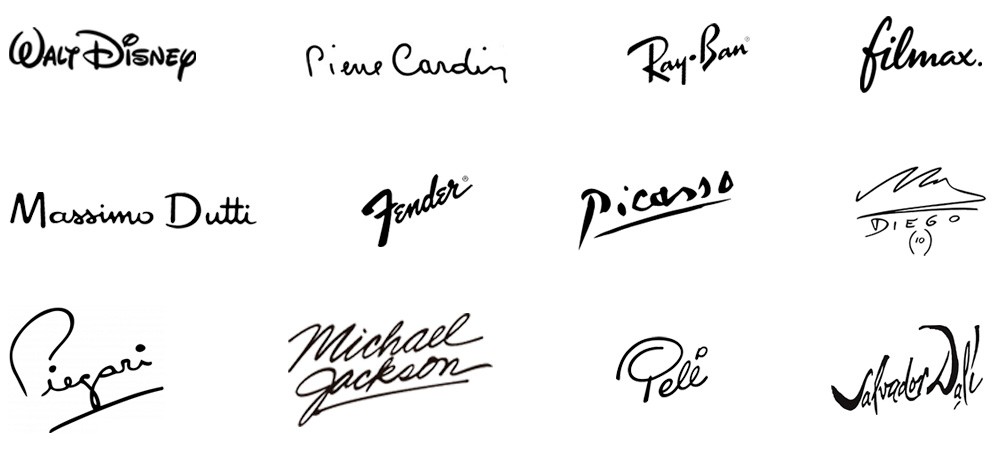
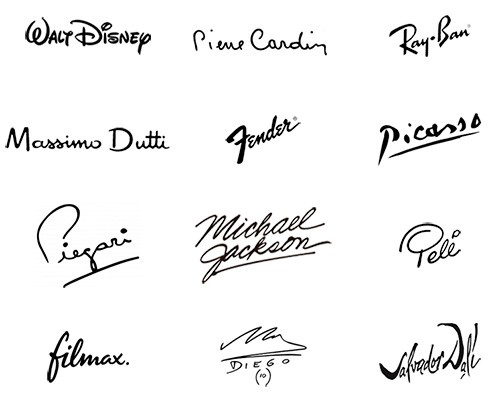
5. Signature

It consists of creating a logo from the handwritten signature of a person.
It is generally applied to very famous personalities whose own name has become a registered trademark.
Such is the case of great fashion designers, musicians and movie and sports stars.

Logotipos con firmas

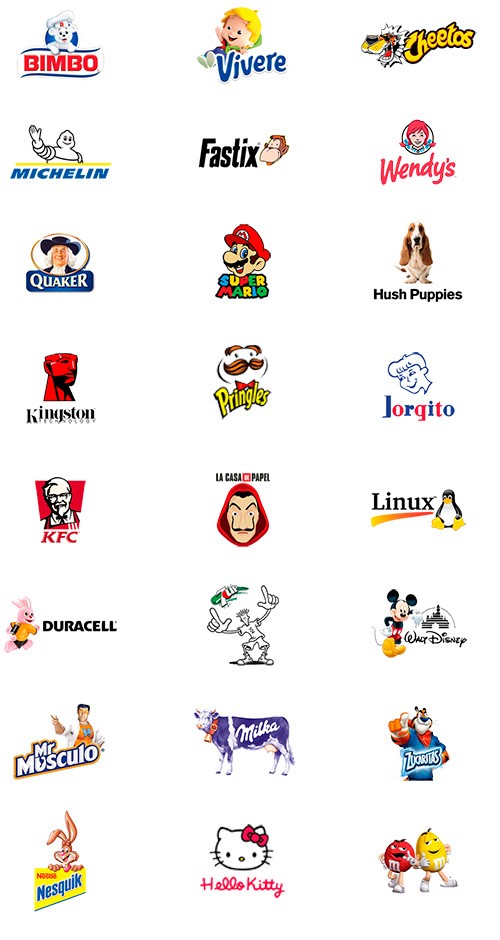
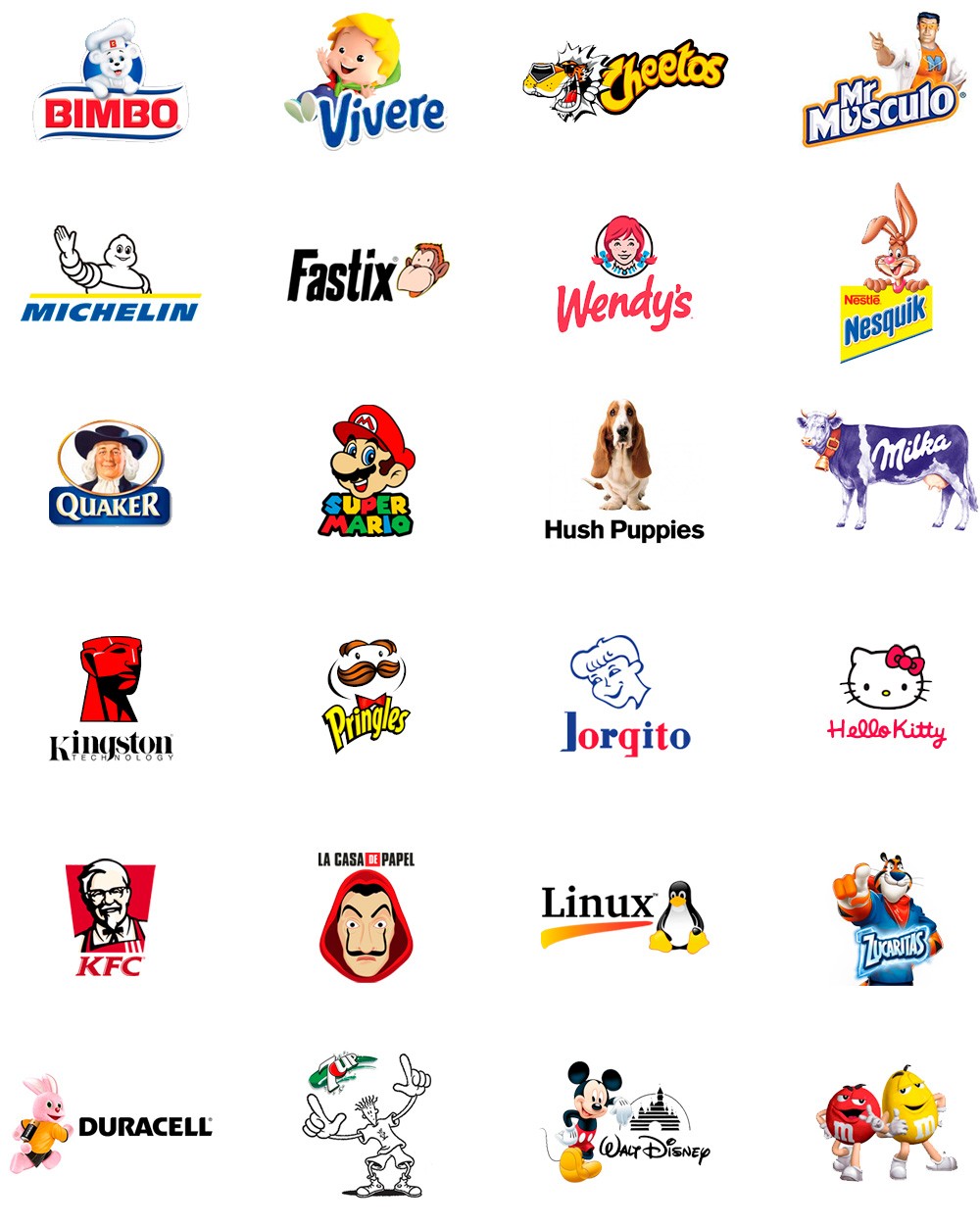
6. Mascot

They are logos whose design is based on a character or mascot, be it an animal, a person, a cartoon or an animated object.

The mascots work as an isotype that complements the logo.
This logo has sufficient graphic identity and does not depend on the mascot to survive, in fact it can be omitted and the brand will be easily recognized.
While the logo gives identity, the mascot directly communicates value and culture to customers, and reinforces the institutional image, since they often maintain the colors of the logo.


Why use a mascot logo?

The mascot is associated with good luck and reflects the spirit of the organizations with which it is linked.
They are very efficient in terms of associating the image with the brand they represent as they are very easy for the public to remember .
They have great communication potential in marketing campaigns, since they are very friendly and allow various advertising developments.
And this is how we see them in animations in audiovisual media, creation of merchandising products, corporeal applications for banners and exhibition stands.
They are even used in promotional live performances with dolls and actors, etc.

The mascot creates a bond of familiarity with its consumers and transmits a very clear message:

  • The Bimbo bread bear is soft, delicate, neat and fluffy.
  • Mr. Muscle is a superhero who with his powers will do the heavy cleaning work without you having to strain.
  • “Fido Dido” from 7up, is a simple character, colorless, adolescent, rebellious, carefree, with a lot of personality and he always does his own thing.
Mascot logo
Mascot Logos

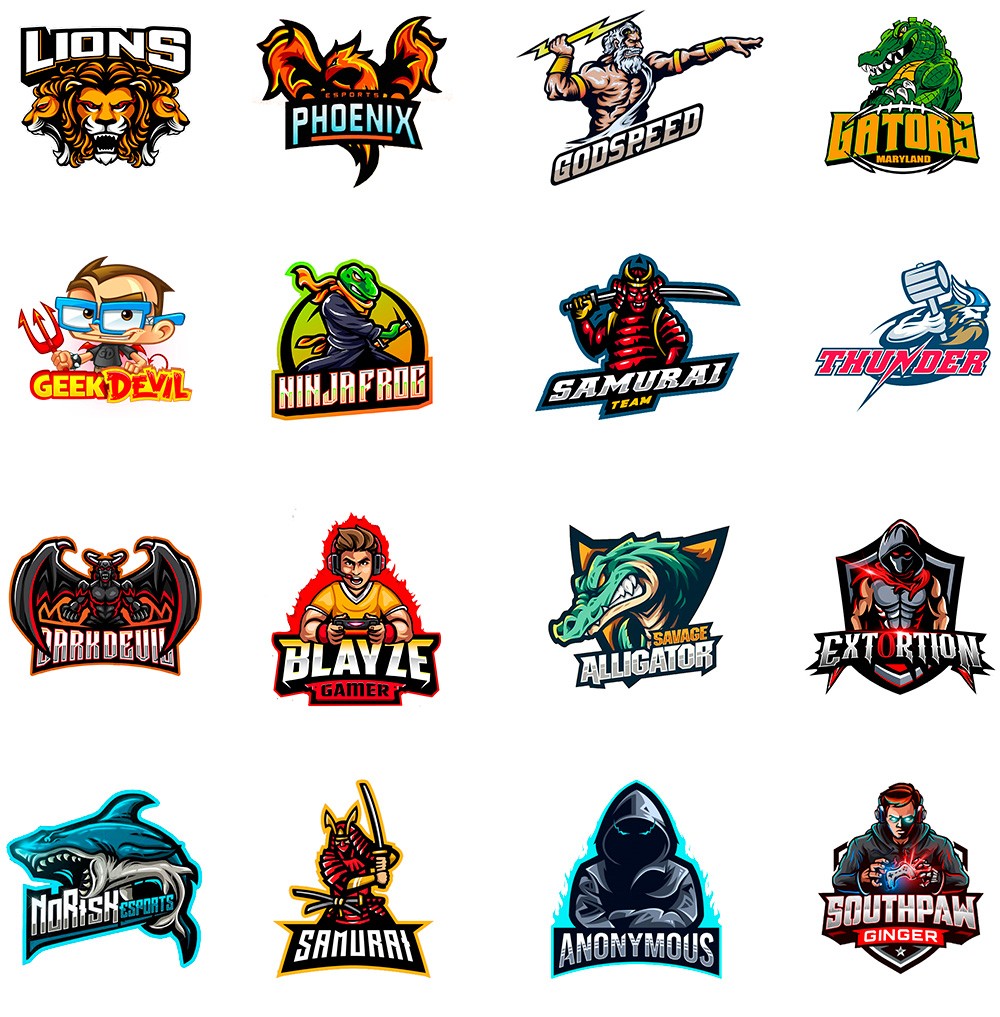
Gamers and Esports

Mascot Logos are currently a trend in the world of Gamers and Esports to identify sports teams.
The choice of mascot reflects the spirit and values of the brand they represent.

In these cases they have a very particular graphic design and their characters have aggressive attitudes and intense colors.
They represent action games with a lot of adrenaline, with opposing teams that seek to be the winner or the hero of the story.

Mascot Logos for Gamers

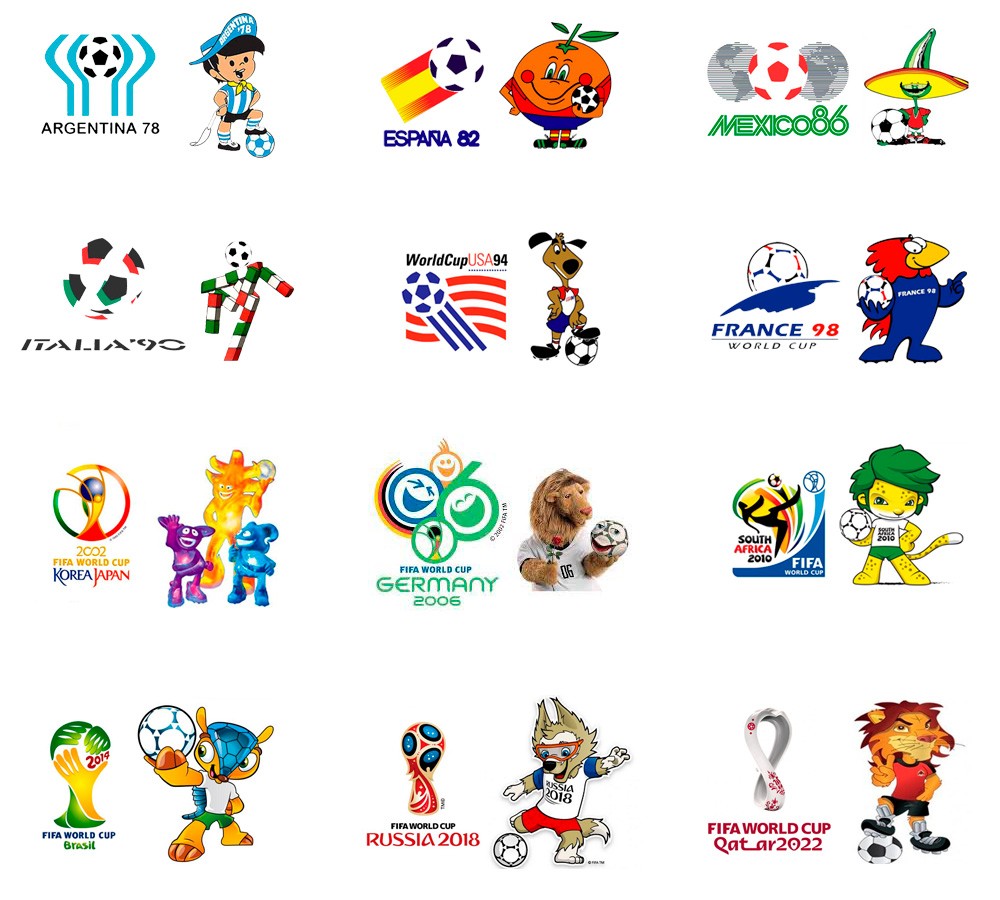
A good example of the use of mascots can be seen in the soccer championships for the FIFA World Cup.
Each country tries to show the world its spirit, culture and tradition through its graphic identity.

Below I show you the mascots and the emblems of the respective sede.

Mascot Logos FIFA World Cup

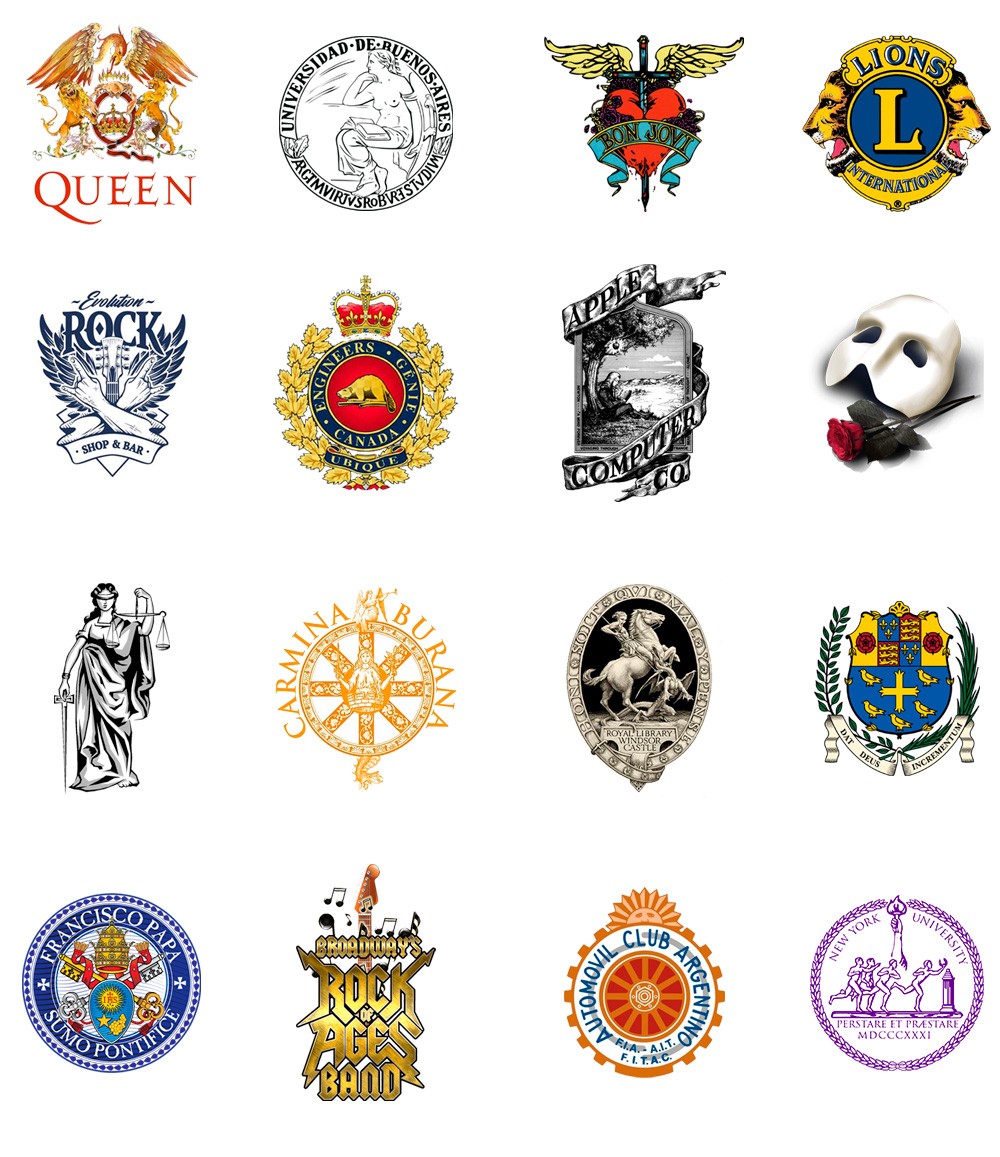
The following types of logos (emblem, shield, badge, and medal) are not necessarily logos, although some function as such.

A logo can be made up of an emblem, but an emblem is not necessarily a logo, rather it is a much more comprehensive concept.
The same concept applies to shields, badges and medals.
All these types of logos grant prestige, distinction and special recognition.
That is why many companies decide to take advantage of these concepts and design their brands using These guys.

7. Emblem

The term emblem comes from the Greek language and means "what is put inside or enclosed", since they were generally inside rectangles or circles.

In ancient times, emblems were enigmatic drawings that told stories through quite complex designs and provided with many details, accompanied by a title and an explanatory text.
They were made by woodcut or intaglio.

At present, they are widely used as a logo or seal to represent institutions of great prestige and trajectory. We can find them in very exclusive universities and clubs, which claim to show their ethical and philosophical values through a solid image that represents them.

They are also used to graphically represent ethical and moral values, such as Justice, Freedom, Independence, equality, etc.

Emblemas Logos
Emblemas Logos

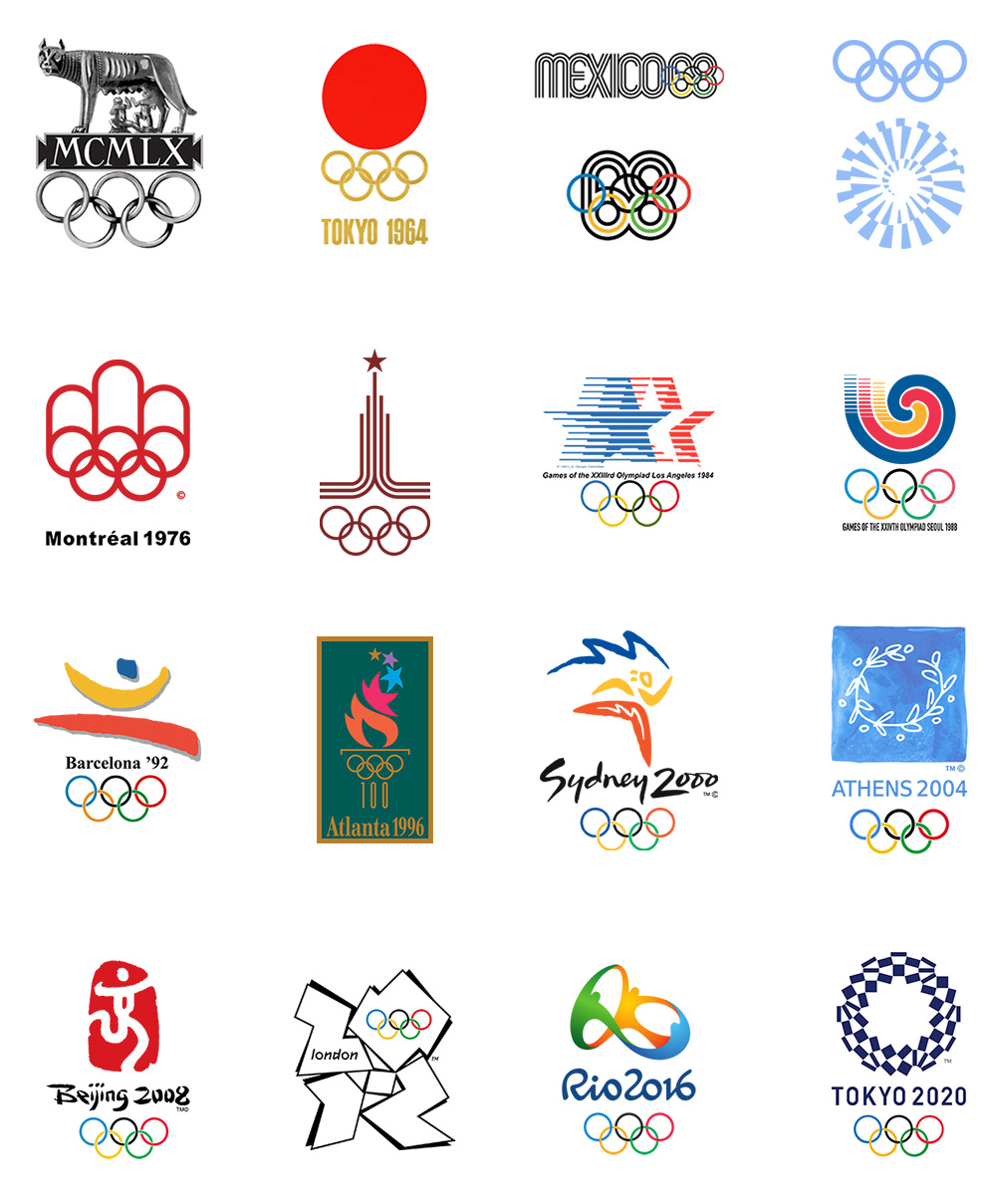
A very frequent use of the emblems can be found in the commemorative designs of world events such as the Olympic Games.

Like the mascots, these emblems are intended to show the world the philosophy and spirit of the city they represent and also generate many advertising and merchandising products.

Emblemas Juegos Olimpicos

8. Shield

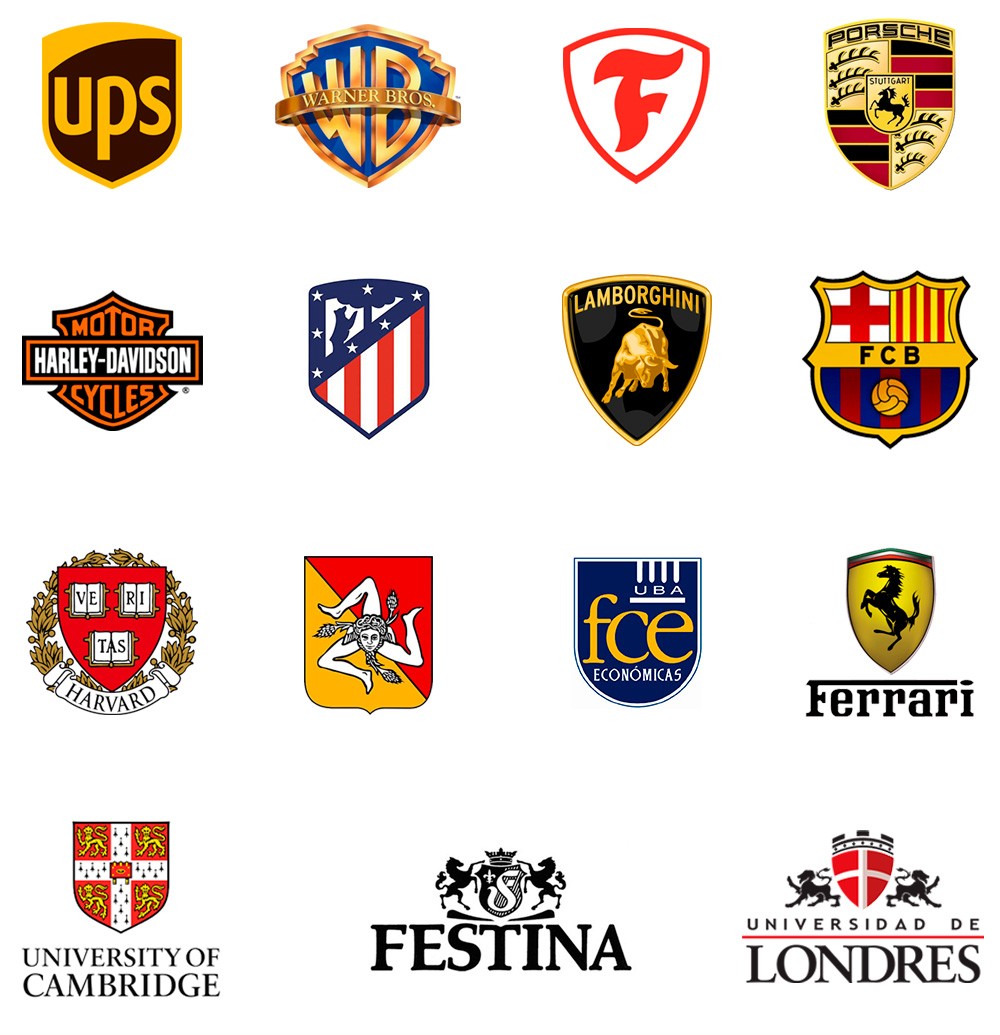
The shields are a type of emblem that refer to the ancient heraldic shields, symbols of belonging to a family, country, region, association or moral ideology, with a strong bond of identity and belonging.
They are directly associated with the coats of arms used by warriors in battles, and from them they acquire their most characteristic feature: their forms.

Shields are used as national symbols to represent countries and regions, as well as by sports clubs, universities, automotive companies, political parties, and religious and social groups.

Unlike emblems, shields have a much more simplified design.
They contain drawings that convey a message or represent identity, loaded with high semantic and allegorical content.
That is why some companies choose shields in their designs of its brands to transmit strength, security, trust, trajectory, luxury and exclusivity.

Logos con Escudos
Logos con Escudos

9. Insignia

An insignia (from the Latin insignia, which means "emblem, symbol, insignia, honorific mark") is a distinctive mark of belonging to a group, rank, rank or function.
It is a symbol or sign of personal power, status or function of a certain social sector.
There are several types of insignia such as flags, decorations, awards, accolades, crowns, cockades and shields.

In graphic design, badges fulfill a similar role to emblems and shields, but their shape and complexity of design vary.
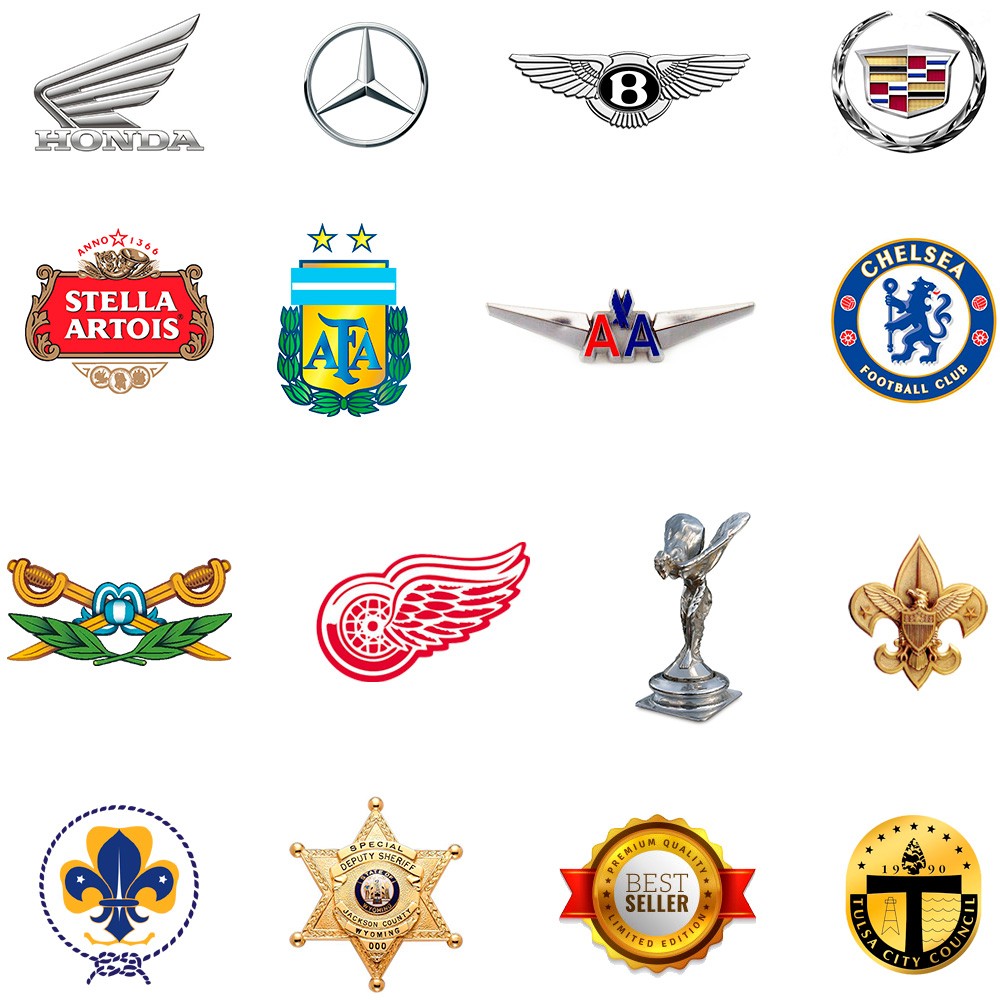
It is very common for brands with badges to contain graphic elements such as wings, stars, crowns, medals, banners , flags, laurels and ribbons, all of them distinctive and decorative elements.

Some companies use badges when designing their brands to show a high-quality image, and make their customers feel worthy of belonging to a certain select group, or having access to a higher quality product.

Insignias logos
Insignias logos

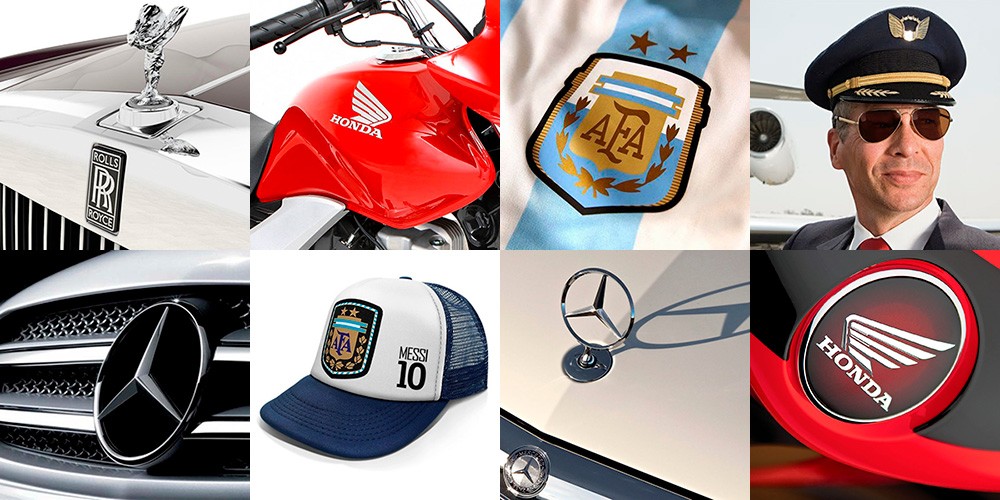
Insignias are generally made of metal but they are also very frequently stamped or embroidered on flags, uniforms and clothing.
They are very chosen in automotive brands or luxury products and also in the military and sports environment.
Virtual badges are also used to reward the best buyer / seller or follower in online stores and social networks.

Insignias aplicadas

10. Medal

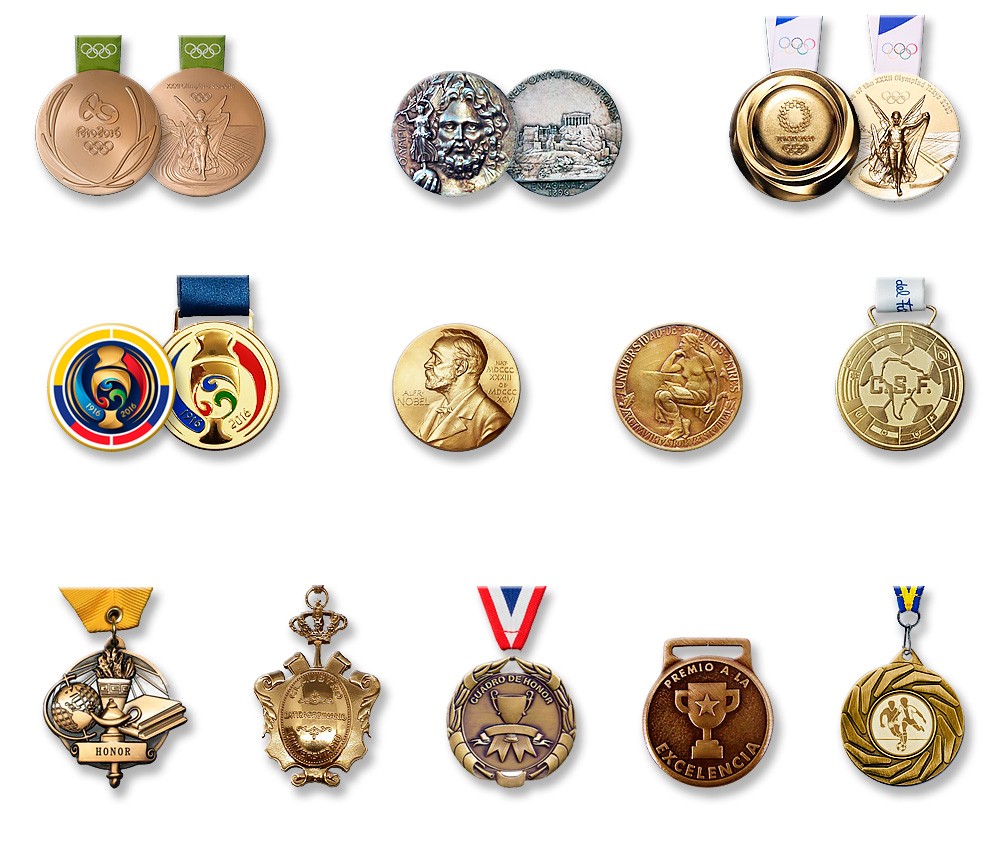
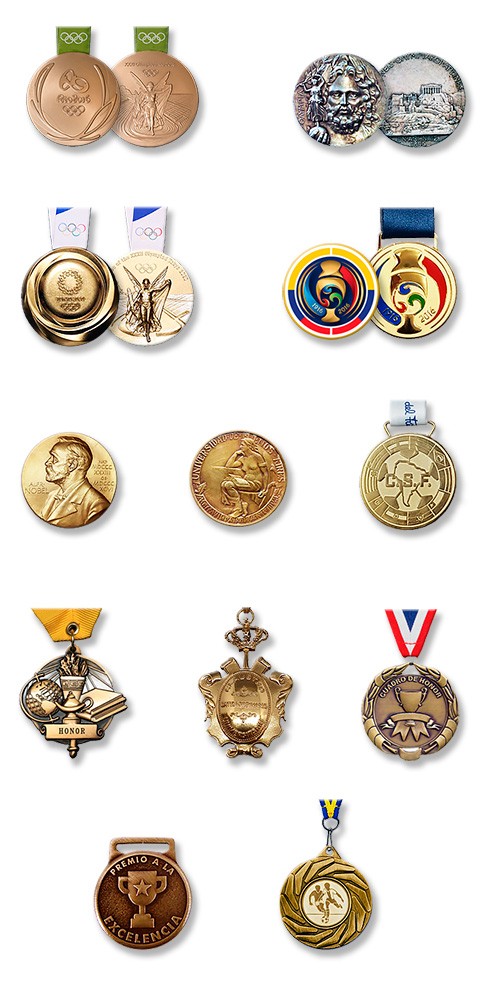
The medals (from the Italian "medaglia" which means "coin or prize") tend to be metallic discs, similar to coins, although with a larger diameter and pronounced relief, that incorporate some type of symbol or distinction.

They can contain logos, shields, emblems and legends.
Medals are quite similar to emblems, shields and badges in terms of the concept they represent.
They are always limited to a round, oval or rectangular shape, and generally go Accompanied by a ribbon to hang from the neck or put on clothing.


A matter of honor

The medals are issued for various purposes, such as a badge that recognizes a person in the military, religious or civil spheres.
They are also used as an award in sports, educational or business competitions, or as a commemoration of an important event or memory.
Therefore, a medal is synonymous with a prize, award, recognition, honor or decoration.

Conceptually, medals are highly prized and desired objects that are awarded to special people: the best in their class.
They are awarded at important ceremonies and events or at official events, and whoever receives them receives recognition that distinguishes them from their peers. .
This represents pride and added value to their curriculum and career, and causes the need to display them as a trophy or distinction.
The type of material of the medals represents the hierarchy of the award: gold, silver, bronze, etc.

As for the graphic design of the medals, we must consider that they are three-dimensional objects of small size and minted in metal in a similar way to coins.
We must choose monochrome designs (although some incorporate color) and that can allow the use of reliefs.

Medallas Logos
Medallas Logos

Final conclusion

I hope you have enjoyed this article and it has been useful to you.
Surely you will continue to call all types of trademarks logo, but at least now you know the differences and the possibilities of use of each one.

If you wanted to have your brand and you consider that I am a suitable professional, do not hesitate to contact me and I will gladly advise you.

In the Related Articles section below, you will find many articles with specific topics that complement the one you just read. Thank you!

>>> I WANT MY LOGO <<<
Packaging posavasos

Claim creative work. Art is Work

Claiming creative work: Creativity is inherent in the human being, but designers, architects and artists still continue to give explanations to get clients to recognize our work.


Art is Work

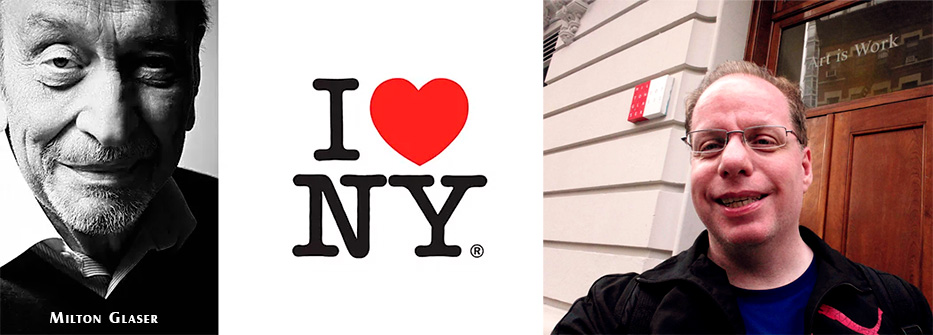
«Art is Work» is the phrase that welcomes the great graphic designer in the Manhattan studio (NYC) Milton Glaser (1929-2020)

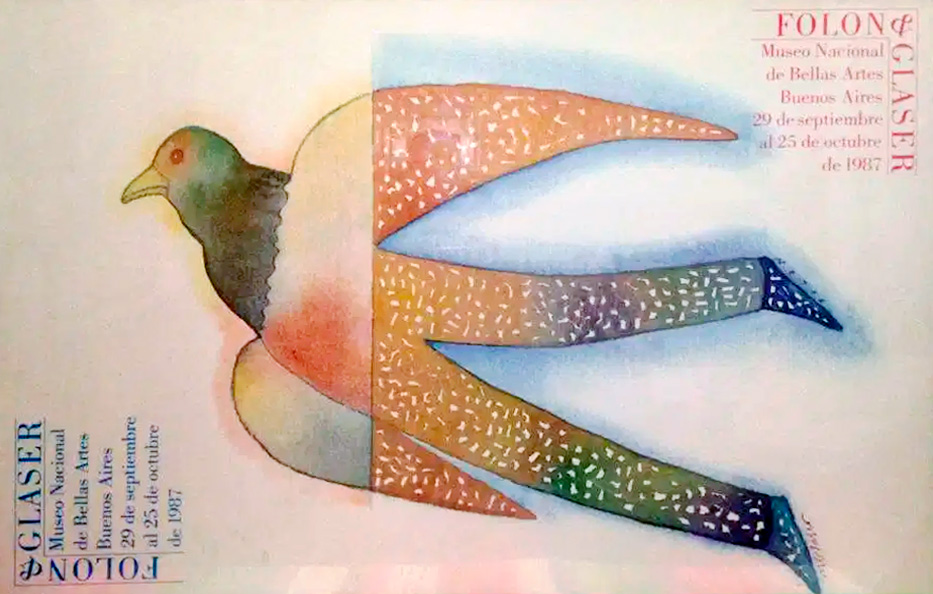
I remember that in 1987 he went to the University where I had just started my Graphic Design career, to give a keynote talk together with Jean Michel Folon , on the occasion of an exhibition both held at the National Museum of Fine Arts in Buenos Aires, which I was also able to attend.


It was there that Milton Glaser, showing a first projected image, pronounced that phrase: "Art is work" , and told the students that we were taking our first steps in the career, that we never give away our work , that being an artist was a profession and not just a hobby or entertainment, that the fact of loving and enjoying our work does not take away its status as such, that there are people who need our "art" and they must be willing to pay for it.


Remembering again

In 2018 I traveled to New York City and of course the city was filled with its iconic "I LOVE NY" design in all the gift shops, and it occurred to me to think if I would still have his studio in Manhattan, I looked it up on my cell phone's GPS and finally found it, a few blocks from the Chrysler Building.

And there I found 31 years later with that phrase that I had forgotten: "Art is work" and I started to think about the number of times that our "artistic" profession is underestimated or undervalued when it comes to set a price for our work.

What got me thinking is why Milton Glaser chose to put that phrase at his studio entrance over any other, when anyone would expect at least a logo, for one of New York's most prestigious design studios.

But it was not so, the first thing that this great graphic designer wanted you to understand "in three words" is that if you go to his studio and intend to hire his services, you must pay!

Claiming the creative professional

This is the first of a series of blogs that I am going to write on my website and in the first person, told from my own experience and perception in almost 30 years of profession.

The mission of all of them, in addition to informing about design-related topics, is to vindicate the creative professional work of the graphic designer through everyday topics such as visual image design , web design, etc.

Through my articles, I intend for clients to know a little more about the aspects that are often not seen in the jobs that designers entrust to us, in addition to making them know a basic language necessary to understand us.

But above all things, they understand that designing is a creative process, which takes time and requires a professional perspective that allows the client's idea to be carried out effectively.

Studies, knowledge, education, training, professional ethics, and above all "experience", are some of the factors that validate that "professional sight" that designers are willing to provide.

When a client decides to hire a professional it is that they need to solve an identity or communication problem of their own, and that is not found in video tutorials or on the web.


Competing with incompetents

Graphic design has some "negative" factors for the professional's role, and that is that many of its digital tools are available to anyone and free of charge, and its basic use may seem very simple and intuitive to encourage a person or company. to dispense with the services of a professional.

There are countless pages on the internet that encourage people to create their free logo, their website without programming knowledge, their online store, or simply their posts on social networks, using predesigned templates that will look "professional" without being an expert.

And so it is that anyone can make visually acceptable “designs”, but conceptually wrong.

Los diseñadores muchas veces nos vemos obligados a competir con esto en cuanto a los presupuestos, y realmente no se puede, ya que se trata de universos totalmente distintos.

No se tiene en cuenta la experiencia del diseñador, ni la visión ni la calidad… solamente el precio y todo se reduce a un número sin ningún tipo de valor agregado.


Things by their name

A brand or logo is not a cartoon, a website is not a Facebook or Instagram profile, and those are not solid structures to insert into a competent commercial market, they are just complements to a much more strategic and complex structure.

Alguna vez leí un meme que decía una gran verdad: “El que cree que cuesta caro un profesional, no sabe lo caro que cuesta un incompetente”

Hacer las cosas mal lleva tiempo y dinero y no logra los objetivos planteados. ¿Por qué no hacer las cosas bien desde el principio de la mano de un profesional capacitado?

Many times clients call me to "help" them to fix something that they themselves tried to do with little knowledge of design, claiming that they do not have a budget ...

“No puedes correr una maratón en ojotas, y pretender ganarla”, es una de mis frases siempre listas para la ocasión.

Every start-up of a business, however small, requires strategic planning and prior economic investment, otherwise it will be doomed to failure.


What is the price of an idea?

Creatives sell products and services that are often intangible, subjective, unreal ... but necessary!

As necessary as an idea itself, which is not seen, but is heard and felt, and above all, it solves communication problems in people's daily lives.

That is what the creative process is about, generating ideas that serve, that inspire, that communicate, that transcend, that catch on, that transcend, that arrive ...

An idea is the first step to start the engine, and if that idea is creative, coherent, logical and successful, the journey will be more fluid and enjoyable, and the most optimal results.

"Art is work" ... I invite you to work together making art an accurate path to achieve your goals.

Take this humble tribute to the teacher Milton Glaser who passed recently, precisely on the day of his 91st birthday.